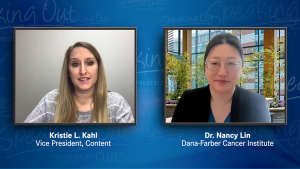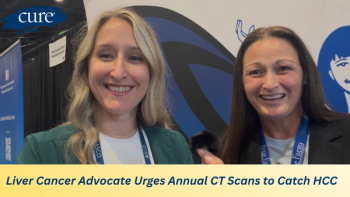
Kristie Kahl of CURE spoke with Nicole Wright Dirks, a volunteer with Blue Faery, a patient advocacy organization focused on liver cancer.

Kristie L. Kahl is vice president of content at MJH Life Sciences, overseeing CURE®, CancerNetwork®, the journal ONCOLOGY, Targeted Oncology, and Urology Times®. She has been with the company since November 2017.
She is a graduate of Rider University, where she acquired a Bachelors of Art in journalism, as well as a graduate of Temple University, where she received her Masters of Science in Sports Management.
Follow Kristie on Twitter at @KristieLKahl, or email her at kkahl@mjhlifesciences.com.
Kristie Kahl of CURE spoke with Nicole Wright Dirks, a volunteer with Blue Faery, a patient advocacy organization focused on liver cancer.
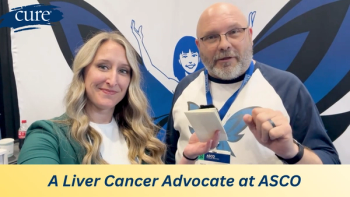
Jeff Cape, a Blue Faery volunteer and HCC caregiver, shares why patient voices matter at ASCO and what he wishes every cancer patient knew.

In a phase 3 study, Opdivo plus Yervoy did not improve overall survival when combined with chemotherapy for HER2-negative gastric or GEJ cancer.
Patients with cancer taking GLP-1 drugs alongside immunotherapy had better long-term survival and fewer immune-related side effects.

Following her breast cancer diagnosis, Guerdy Abraira utilized genomic testing to gain clarity on her treatment path.

Clinical trial data show a carboplatin-free regimen offers similar results with fewer side effects for patients with stage 2 to 3 HER2+ disease.

At the Miami Breast Cancer Conference, Dr. Heather A. Parsons shared growing evidence for the prognostic value of circulating tumor DNA.
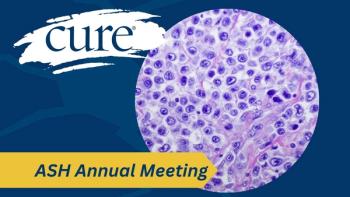
Among older patients with newly diagnosed diffuse large B-cell lymphoma (DLBCL), Epkinly plus R-mini-CHOP appeared to be well tolerated and elicited responses.
Transitioning treatment with Niktimvo to a dose of 0.6 mg/kg every four weeks appeared feasible for chronic graft-versus-host disease.

Trodelvy plus Keytruda may maintain quality of life and slow physical decline in metastatic triple-negative breast cancer.

Trodelvy reduced risk of disease progression or death versus chemotherapy in patients with previously untreated metastatic triple-negative breast cancer.

Dr. Alicia Arnold and Dr. Priyanka Raval discuss first- and later-line treatment options for those with ER-positive, HER2-negative stage 4 breast cancer.
Dr. Mabel Mardones educates patients on breast cancer subtypes, as well as treatment options for those with ER-positive, HER2-negative disease.

Dr. Alicia Morgans discussed complications associated with ADT in prostate cancer, and how men can still maintain quality of life regardless.

Dr. Kristen Scarpato explains the role of genetic testing in prostate cancer care, as well as its use in determining treatment with PARP inhibitors.

Dr. Kelly Stratton answered the most frequently asked questions in prostate cancer regarding localized prostate cancer care, including surgery and focal therapy.

Dr. Kelly Stratton answers the most frequently asked questions in prostate cancer regarding risk for recurrence, progression and treatment options.

Tara Sweeney, BSN, RN, OCN, CHPN discussed best care for the health and well-being of a person across all stages of their cancer survivorship.

Aspirin use in patients with PI3K-mutated colorectal cancer helped to reduce disease recurrence, highlighting the importance of upfront genomic testing.

Patients newly diagnosed with multiple myeloma who are transplant ineligible or deferred may benefit from receiving a Darzalex treatment combination.
The risk for disease progression or death was reduced by 51% with subcutaneous Darzalex Faspro in certain patients with smoldering multiple myeloma.
Calquence plus Venclexta, with or without Gazyva, improved progression-free survival over the standard-of-care chemoimmunotherapy in patients with untreated chronic lymphocytic leukemia.
Long-term follow-data shows Revuforj to be effective in the treatment patients with R/R KMT2Ar acute leukemias.

For patients with transplant-ineligible or -deferred newly diagnosed multiple myeloma, the addition of Darzalex to VRd improved MRD responses as well as progression-free survival.

Following a CURE® Educated Patient® Lung Cancer Summit, the City of Hope expert answered 10 commonly asked questions from patients with lung cancer.

When compared with Zytiga, Xtandi appeared to have a lower incidence of infection among men with prostate cancer, especially those under 70 years.

Among patients with EGFR-mutated, advanced NSCLC, frontline treatment with Rybrevant plus Leclaza significantly prolonged progression-free survival.

Dato-DXd was efficacious in patients with non-small cell lung cancer with brain metastases who have certain gene alterations, a phase 2 study showed.

Patients with high-risk prostate cancer who had a higher dose of radiation plus long-term androgen deprivation therapy tended to live longer than those who had a lower dose.
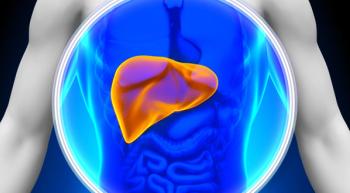
Keytrida plus Lenvima improved survival and duration of response in patients with advanced hepatocellular carcinoma.
December 31st 2020