

Among patients with cancer, high out-of-pocket costs were found to impact access to health care, adherence to medication, as well as quality of life.

Ryan Scott is a Former Editor of CURE; she joined MJH Life Sciences in 2021 up until 2026.
Among patients with cancer, high out-of-pocket costs were found to impact access to health care, adherence to medication, as well as quality of life.

The first patient with locally advanced rectal cancer has been enrolled in the FORTRESS study which is evaluating the investigative immunotherapy NG-350A.

The FDA has approved an application to initiate a pilot study with Alpha DaRT for patients with recurrent glioblastoma, a form of brain cancer.

Adolescent and young adult patients with cancer face delayed diagnoses, financial hardships and gaps in specialized care, creating a need for tailored support.
Here is a roundup of March 2025 U.S. FDA approvals across cancer subtypes, including prostate, bladder and gastrointestinal cancers.
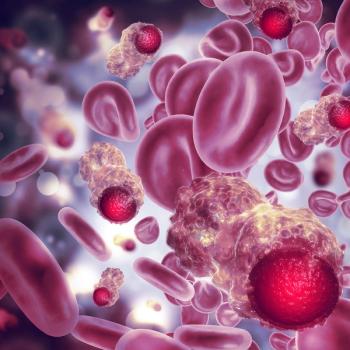
The first patient with relapsed or refractory acute myeloid leukemia has been dosed with Annamycin plus Cytarabine in the global phase 3 MIRACLE trial.

First-line Rybrevant plus Lazcluze significantly extended overall survival versus Tagrisso in mutated, advanced or metastatic non-small cell lung cancer.

The first patient has been dosed with [212Pb]VMT01 in a phase 1/2a trial evaluating the safety of the agent in patients with melanoma.

The FDA approved neoadjuvant Imfinzi, gemcitabine and cisplatin, followed by adjuvant Imfinzi after radical cystectomy in muscle invasive bladder cancer.

March is Kidney Cancer Awareness Month, highlighting the disease, early detection and and patient advocacy, with voices like Sid Sadler raising awareness.

Although itolizumab did not improve response rates at Day 29 for patients with acute GVHD, the therapy showed significant benefits in long-term outcomes.

Treatment with VXM01, an investigational vaccine, plus Bavencio demonstrated both safety and tolerability in patients with recurrent glioblastoma.

Sid Sadler discusses kidney cancer awareness, patient advocacy and the need for specialized care to improve access to treatments and clinical trials.

Melissa Ursini discussed her experience with a colorectal cancer diagnosis at age 37, highlighting her insights during Colorectal Cancer Awareness Month.
The European Commission has approved Rytelo treatment in transfusion-dependent anemia due to very low–, low– or intermediate-risk myelodysplastic syndrome.

An application was submitted to the European Medicines Agency seeking approval for treatment with sugemalimab in stage 3 NSCLC following chemoradiotherapy.

Cretostimogene treatment shows best-in-class durability of response for BCG-unresponsive non-muscle invasive bladder cancer with carcinoma in situ

Dr. Regina Hampton shares case studies from her own practice, illustrating how genomic insights have improved patient outcomes in those with breast cancer.

SpaceOAR Hydrogel reduced the risk of bowel disorders, the need for colonoscopy and rectal resection following radiation therapy in prostate cancer.

Dr. Debu Tripathy explains how ctDNA is used to in breast cancer detection and how it can also indicate the presence of MRD.
The FDA has approved the use of Gozellix, a PSMA-PET imaging agent, to help detect prostate cancer using gallium-68 gozetotide in PSMA-PET scans.

Dr. Sara M. Tolaney discussed HER2-positive breast cancer, highlighting key trials, evolving treatment strategies, and the potential for improved outcomes.
The FDA has granted approval to an act of compassionate use treatment with the anti-cancer drug Namodenoson for a patient with pancreatic cancer.

Dr. Regina Hampton highlighted unmet needs in black women with breast cancer and details how genomic information can drive effective treatment options.

The first patient has been dosed in a phase 2b trial evaluating the first-in-class agent Halneuron for those with neuropathic pain following chemotherapy.
Bexobrutideg, a bioavailable agent, was granted orphan drug designation by the FDA for Waldenström macroglobulinemia, a type of non-Hodgkin's lymphoma.

Among patients with renal cell carcinoma, those with larger tumors may yield the most benefit from SBRT compared with other ablative options.

Dr. Kevin Kalinsky covers the gamut of the current treatment landscape for patients with HER2-negative breast cancer, highlighting recent advancements.
Investigators found that some patients with high-risk nonmetastatic hormone-sensitive prostate cancer were understaged by conventional imaging.

Blue light cystoscopy had a statistically significant reduction in risk of recurrence versus white light cystoscopy in high-risk bladder cancer.