

The phase 2 TEDOPaM trial evaluating patients with advanced or metastatic pancreatic ductal adenocarcinoma met its primary end point.

Ryan Scott is a Former Editor of CURE; she joined MJH Life Sciences in 2021 up until 2026.
The phase 2 TEDOPaM trial evaluating patients with advanced or metastatic pancreatic ductal adenocarcinoma met its primary end point.

The first patient has been enrolled in the phase 3 PROSTATE-IQ trial being conducted in men with prostate cancer recurrence following a prostatectomy.
Artificial intelligence aids in polyp detection, enhancing colonoscopy effectiveness and reducing the risk of colorectal cancer progression in patients.

Treatment with thermal ablation was noninferior to surgical resection in small-size colorectal liver metastases, according to the COLLISION trial.

Dr. Park shares the three biggest takeaways, in his opinion, to have come out of the ASCO GU Symposium, highlighting studies across kidney, bladder and prostate cancers.

Replacing transplant and chemo with CI-based therapy and ISRT maintains survival, reduces side effects in younger patients with classic Hodgkin lymphoma.
The FDA has accepted the resubmission of the BLA of Ordspono for review in relapsed/refractory follicular lymphoma following previous systemic therapy.

Camizestrant with a CDK 4/6 inhibitor had a statistically significant and clinically meaningful improvement in PFS in HR+/HER2– advanced breast cancer.

Treatment with the CAR T-cell therapy cema-cel demonstrated durable responses in patients with relapsed/refractory large B-cell lymphoma.

Dr. Chandler Park helps patients with genitourinary cancers, including both prostate and bladder, understand the importance of genetic testing.

Fractionated reirradiation is safe and feasible, suggesting higher reirradiation dose may be feasible in patients with recurrent high-grade glioma.

Metronomic capecitabine plus an aromatase inhibitor improved survival outcomes in hormone receptor-positive, HER2-negative metastatic breast cancer.

Neoadjuvant Opdivo with platinum-doublet chemo had a statistically significant and clinically meaningful improvement versus chemo alone in resectable NSCLC.
Odronextamab demonstrated a manageable safety profile and generated durable responses in patients with R/R DLBCL who have progressed after CAR-T therapy.
Treatment with tuspetinib in combination with Venclexta and Vidaza in newly diagnosed acute myeloid leukemia showed safety and antileukemic activity.

Dr. Debu Tripathy breaks down the FDA approval of Enhertu in unresectable or metastatic HR-positive, HER2-low or -ultralow breast cancer.

The FDA has granted orphan drug designation to the oral agent OPN-6602 for the treatment of patients with relapsed or refractory multiple myeloma.
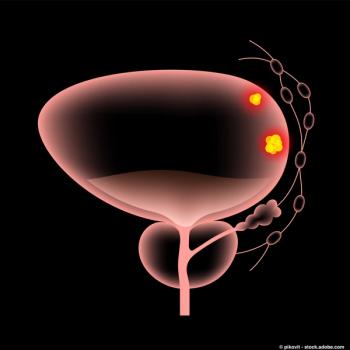
Among patients with suspected MIBC, the incorporation of mpMRI for initial staging prior to transurethral resection of bladder tumor was beneficial.
Dr. Guru P Sonpavde discusses updated data from studies like EV-302 and CheckMate 274 for patients with urothelial cancer at the 2025 ASCO GU meeting.

Among those with intermediate-risk prostate cancer, high PSA levels prior to HIFU led to an increased risk of overall recurrence and treatment failure.
The FIRCE-1 trial investigating the CAR T-cell therapy firi-cel in relapsed/refractory large B-cell lymphoma has been discontinued.

The prognosis of patients with gastrointestinal stromal tumors is significantly impacted by gastrointestinal bleeding.

Dr. Tycel Phillips discusses the implications of the FDA approval of Calquence plus bendamustine and Rituxan in untreated MCL.

The FDA has updated the product labeling for Xeloda and 5-FU to highlight the risks associated with dihydropyrimidine dehydrogenase deficiency.

THIO sequenced with Libtayo extended overall survival in those with non–small cell lung cancer who progressed on two or more standard-of-care regimens.

Patients with non-metastatic GIST treated with neoadjuvant TKIs prior to surgery experienced a benefit which led to less invasive or complex surgeries.

Concomitant radiotherapy plus temozolomide significantly increased progression-free survival versus radiotherapy alone in IDH-wildtype glioblastoma.
Dr. Tycel Phillips discusses the FDA approval of a Calquence combo in MCL, making it the first and only BTK inhibitor approved for first line therapy.

Dr. John Oertle discussed the significance of World Cancer Day, raising awareness about cancer care advancements and improving patient outcomes.

Dr. Filippo Pietrantonio discusses OrigAMI-1 trial data which assessed Rybrevant in mutated, wild-type, non-HER2-amplified metastatic colorectal cancer.