
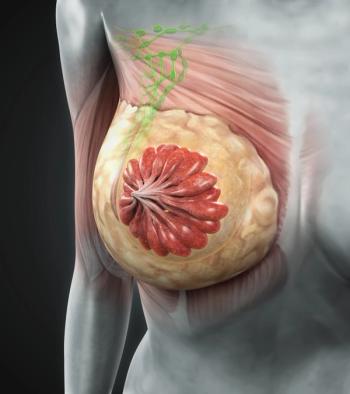
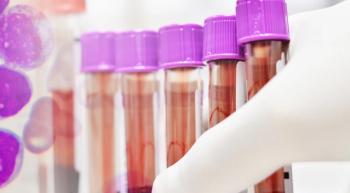
Dr. Heather Parsons of Dana-Farber Cancer Institute explains how a liquid biopsy could help patients with breast cancer and their care teams learn vital information.
Dr. Heather Parsons of Dana-Farber Cancer Institute explains how a liquid biopsy could help patients with breast cancer and their care teams learn vital information.
New treatments and ongoing trials are providing more options and better outcomes for patients with myeloproliferative neoplasms, an expert explained.
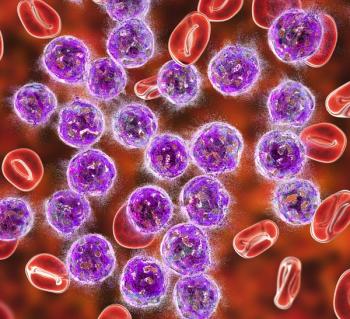
Dr. Douglas Tremblay of the Ichan School of Medicine explains the necessity of cytoreductive therapy for patients with MPNs such as essential thrombocythemia and polycythemia vera.
After being diagnosed with essential thrombocythemia, Marilyn Kay Edwards was not told much about her disease.
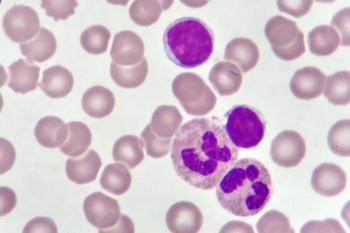
Among patients with relapsed chronic lymphocytic leukemia (CLL) who expressed frequent baseline BTK mutations, responses on the non-covalent BTK inhibitor Jaypirca remained high, according to data presented at the 2023 ASH Annual Meeting.
A treatment combination of Sarclisa, Kyprolis, Revlimid and dexamethasone demonstrated a complete response in patients who were newly diagnosed with multiple myeloma.

An expert discussed the importance of knowing the questions to ask a patient’s care team to navigate one’s journey, including treatment and next steps.
Patients with chemotherapy-naïve, HER2-low hormone receptor-positive metastatic breast cancer experienced antitumor activity via combination therapy with Arimidex or Faslodex plus Enhertu, according to data from the phase 1b DESTINY-Breast08 trial.
CURE® recently covered the 2023 American Society of Hematology Annual Meeting. In case you missed it, here is some news that came out of the conference that patients should know about.

Data showed that metabolic and genetic factors could contribute to aggressive tumors in Latin American and non-Hispanic White patients with breast cancer.
Dr. Lucia Masarova sat down with CURE® and discussed the advancements she hopes to see in 2024 for the treatment of patients with myeloproliferative neoplasms.
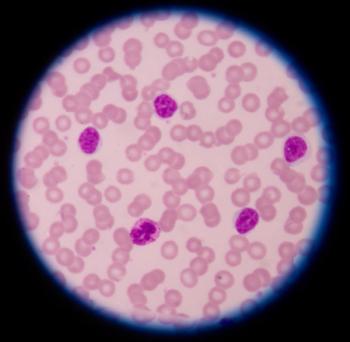
Children and adults with relapsed/refractory KMT2A rearranged acute leukemia may obtain promising response rates with revumenib, a novel targeted therapy.
Study findings support the use of a financial navigation program, in hopes of aiding patients with multiple myeloma affected by financial toxicity.
A novel cell therapy demonstrated early efficacy and an acceptable safety profile in patients with graft-versus-host disease undergoing haploidentical stem cell transplantation.
Results from an ongoing phase 2 study show the viability for the use of Brukinsa after patients with previously treated B-cell malignancies are deemed intolerant to the next-generation Bruton tyrosine kinase inhibitor Calquence.
CURE® recently covered the San Antonio Breast Cancer Symposium. In case you missed it, here is some news that came out of the conference that patients should know about.

Researchers reported long-lasting responses and no new safety concerns in patients with relapsed/refractory follicular lymphoma during the 2023 ASH Annual Meeting and Exposition.
Where a patient lives may affect what kind of treatment they are offered for their CLL or SLL. However, second opinions and learning about one’s cancer diagnosis can help.

The three-year final analysis of efficacy and safety of the REACH3 trial showed that patients with steroid-refractory or dependent chronic graft-versus-host disease benefited more with Jakafi compared with the best available treatment.
Molecular minimal residual disease status may offer clues as to which patients with acute monocytic leukemia will benefit from certain therapies.

Autologous hematopoietic cell transplantation, compared with CAR-T cell therapy, resulted in lower rates of relapse and improved progression-free survival in patients with relapsed large B-cell lymphoma while they were in complete response.

The recent phase 3 TRANSFORM-1 study concluded that navitoclax combined with Jakafi showed significant spleen volume reductions in patients with myelofibrosis.
The stem cell thrapy, Orca-T led to promising relapse-free and overall survival rates in patients with intermediate- to high-risk myelodysplastic syndrome.

Data from the ZUMA-7 trial shows that age alone should not be a barrier of consideration of administering CAR-T cell therapy to patients with large B-cell lymphoma, says Dr. Marie José Kersten.
An artificial intelligence platform was able to tell the difference between patients with prefibrotic primary myelofibrosis and essential thrombocythemia. However, an expert says that there are considerations that patients must remember when it comes to the use of such programs.
The quality-of-life improvement with Abecma in patients with relapsed/refractory multiple myeloma was greater when compared with standard regimens.

Presurgical Keytruda Plus Chemo, Postsurgical Keytruda Continued to Show Benefits in in patients with high-risk, early-stage triple-negative breast cancer.
Tecartus is safe and effective in real-world patients with relapsed/refractory mantle cell lymphoma, regardless of the presence of high-risk features.

Research demonstrated comparable outcomes in the real-world setting and in the phase 2 MajesTEC-1 trial when it came to treatment with Tecvayli for relapsed or refractory myeloma.

Treatment with an all-oral regimen led to three-year overall survival and relapse-free survival rates of 97% in patients with acute promyelocytic leukemia, a subset of acute myeloid leukemia.