

Patients with clear cell renal cell carcinoma had improved overall survival when treated with adjuvant Keytruda compared to placebo.
Patients with clear cell renal cell carcinoma had improved overall survival when treated with adjuvant Keytruda compared to placebo.
Opdivo failed to improve disease-free survival in patients with localized renal cell carcinoma at high risk of relapse, according to findings from CheckMate 914.

Urinary minimal residual disease-negative status was related to preventing the return of cancer when certain patients with bladder cancer received Adstiladrin.

Patients with metastatic castration-resistant prostate cancer previously treated with external beam radiation therapy did not increase incidence of blood-related side effects with radium-223 compared with the overall population.

Frontline treatment with Keytruda and Cabometyx produced responses with a manageable safety profile in patients with cisplatin-ineligible urothelial carcinoma, a type of bladder cancer.

Nubeqa plus androgen deprivation therapy and docetaxel to treat patients with metastatic hormone-sensitive prostate cancer lowered hospitalization rates but led to marginally longer lengths of stay compared with those treated with placebo, androgen deprivation therapy and docetaxel.
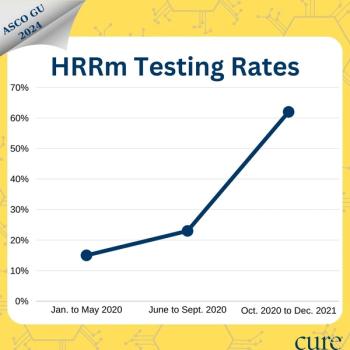
Approximately 40% of patients with metastatic castration-resistant prostate cancer did not undergo certain types of tests that can be instrumental in treatment decisions.

Treatment with Zytiga, prednisone and Erleada plus another treatment regimen improved prostate cancer outcomes and did not change health-related quality of life outcomes.

Lynparza, Zytiga and prednisone led to improved progression-free survival and response rates in patients with metastatic prostate cancer.

Cabometyx plus Tecentriq led to improved progression-free survival compared with novel hormonal therapy in patients with metastatic castration-resistant prostate cancer.
Circulating tumor DNA can be a valuable tool in gastric cancer, but unanswered questions remain, an expert said.
Older adults with gastric cancer tended to have better outcomes when they walked 2,500 steps per day or more.

Findings presented at the 2024 Gastrointestinal Cancers Symposium support Fruzaqla’s potential to provide an improved survival benefit and quality of life for those with previously treated metastatic colorectal cancer.

Adding Imfinzi and Avastin to transarterial chemoembolization led to a 23% reduction in the risk of progression or death in patients with liver cancer.

Circulating tumor DNA-based minimal residual disease lent insight into which patients with stage 2/3 colorectal cancer may be at higher risk for recurrence and which could benefit from postsurgical chemotherapy.

Patients with unresectable hepatocellular carcinoma and poor liver function were more likely to experience serious side effects leading to regorafenib treatment discontinuation, researchers have found.

Patients with resectable mismatch repair-proficient and -deficient colorectal cancer had robust responses to neoadjuvant botensilimab/balstilimab.

In patients with esophageal squamous cell carcinoma, the combination of Tecentriq, tiragolumab and chemotherapy improved survival outcomes, research found.
In patients with TRK fusion GI cancers, Vitrakvi continued to show improvements regarding responses to treatment, survival and safety, research found.
Keytrida plus Lenvima improved survival and duration of response in patients with advanced hepatocellular carcinoma.
The use of FOLFOXIRI for metastatic colorectal cancer was lower than one what expert was expecting.

The use of the chemotherapy regimen FOLFOXIRI plus Avastin has increased from 2013 to 2022 in patients with metastatic colorectal cancer, particularly in patients aged 50 years and younger.

Certain patients with metastatic colorectal cancer were more likely to have long-term remission to Stivarga treatment, recent research showed.

Imfinzi plus chemotherapy, when given before surgery, improved pathologic complete response rates, regardless of region, in certain patients with gastric or gastroesophageal junction cancers.

Treatment with Opdivo and chemotherapy improved survival in patients with gastrointestinal cancers, compared with chemotherapy alone, according to a phase 3 trial.

Patients with advanced gastric cancers tended to have better survival outcomes when given Opdivo plus chemotherapy, compared to those who were given chemotherapy alone.

Research focuses on the importance of quality of life and nutritional needs for patients with breast cancer.

Menin inhibitors for patients with AML have been one of many improvements within the blood cancer space this year, Lee Greenberger of the Leukemia and Lymphoma Society told CURE®.

Dr. Heather Parsons of Dana-Farber Cancer Institute explains how a liquid biopsy could help patients with breast cancer and their care teams learn vital information.
New treatments and ongoing trials are providing more options and better outcomes for patients with myeloproliferative neoplasms, an expert explained.