

Patients with Medicaid or no insurance may have worse survival outcomes compared with Medicare or private insurance in those with metastatic renal cell carcinoma.
Patients with Medicaid or no insurance may have worse survival outcomes compared with Medicare or private insurance in those with metastatic renal cell carcinoma.

Immigrant and foreign-born cancer survivors experience several disparities that suggest barriers to care and “may portent worse health outcomes in cancer survivorship,” according to researchers.

Patients 60 years and older with gastrointestinal cancers who reported inadequate emotional support were more likely to have poorer physical and mental quality of life, although no effect was observed in overall survival.

Patients with cancer undergoing immunotherapy treatment did not have increased hospitalizations or serious side effects after getting the flu shot.

Jaktinib significantly improved spleen volume reduction rates compared with hydroxyurea in intermediate- to high-risk myelofibrosis.
An expert discusses the ongoing SPARK trial for KRASG12-mutant non-small cell lung cancer, and what she hopes for the future of this patient population.

Watch Dr. Rami Komrokji and Dr. John O. Mascarenhas answer questions about myelofibrosis during the CURE® Educated Patient® MPN Summit.

Patients with a subtype of lymphoma may be able to exclude radiotherapy if they respond to chemoimmunotherapy, although more follow-up is needed to assess potential long-term toxicities.
Watch Dr. John O. Mascarenhas, from Icahn School of Medicine, discuss novel therapies in myelofibrosis during the CURE® Educated Patient® MPN Summit.
Watch Dr. Rami Komrokji, from Moffitt Cancer Center, discuss risk stratification and management of myelofibrosis during the CURE® Educated Patient® MPN Summit.
Watch Dr. Nikolai Podoltsev, Dr. Jerry Spivak and Amy Lane answer questions about polycythemia vera during the CURE® Educated Patient® MPN Summit.

Watch Dr. Jerry Spivak, from Johns Hopkins University School of Medicine, discuss what is on the horizon in the management of polycythemia vera during the CURE® Educated Patient® MPN Summit.

Most patients with nonmetastatic castration-resistant prostate cancer were able to stay on their therapies long-term, research showed.
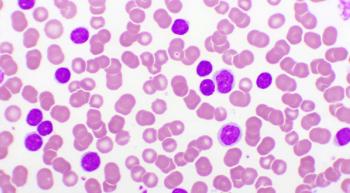
Findings from a phase 3 trial demonstrated that half of patients with FLT3-ITD-mutant acute myeloid leukemia and detectable minimal residual risk derived a relapse-free survival benefit with Xospata.
Watch Dr. Nikolai Podoltsev, from Yale School of Medicine, discuss the current management of polycythemia vera during the CURE® Educated Patient® MPN Summit.
Watch Dr. Lucia Masarova, Dr. Laura C. Michaelis and Celia Militz answer questions about essential thrombocythemia during the CURE® Educated Patient® MPN Summit.
CAR-T cell therapies have not always been easy to access for patients with myeloma, though that is slowly changing, an expert explained.

Watch Dr. Laura C. Michaelis, from the Medical College of Wisconsin, discuss the current and future management of essential thrombocythemia during the CURE® Educated Patient® MPN Summit.

Patients with inactive early-stage chronic lymphocytic leukemia may benefit from a wait-and-watch approach compared with immediate treatment with Imbruvica, findings from a phase 3 trial showed.

Jakafi led to improved symptom score and spleen volume reductions in patients with myelofibrosis, regardless of anemia or transfusion status, recent research showed.
Watch Dr. Lucia Masarova, from MD Anderson Cancer Center, discuss risk stratifying patients with essential thrombocythemia during the CURE® Educated Patient® MPN Summit.

Maintenance Darzalex, with or without Pomalyst was safe and efficacious in treating patients with relapsed myeloma who underwent salvage autologous hematopoietic stem cell transplant.
Iclusig plus reduced-intensity chemotherapy led to improved outcomes for patients with Philadelphia chromosome (Ph)–positive acute lymphoblastic leukemia, and should be the new standard of care, one expert said.

An ongoing trial is examining Calquence in older or frail patients with chronic lymphocytic leukemia — a group that is typically left out of clinical trials.

Patients with non-small cell lung cancer who cleared 50% or more of cancerous DNA from their blood by their fourth treatment cycle tended to have better outcomes on maintenance therapy, research showed.

Meaningful improvements in survival were obtained with Zejula maintenance therapy compared with placebo in patients with advanced ovarian cancer that was newly diagnosed.

Tumor treating fields therapy “is a potentially paradigm-shifting new treatment modality” for metastatic non-small cell lung cancer, says Dr. Ticiana Leal.

Patients with advanced-stage classic Hodgkin lymphoma had a longer progression-free survival rate with Opdivo plus AVD, a chemotherapy regimen, compared with Adcetris plus AVD.


Jemperli plus carboplatin and paclitaxel also helped patients with early endometrial cancer maintain their health-related quality of life throughout follow-up.