







A survivor shares tips on ways to practice gratitude the holiday season.
A survivor shares tips on ways to practice gratitude the holiday season.

Treatment with UGN-102 has shown promise as a non-surgical alternative when compared with a surgical approach for certain patients with bladder cancer.

CURE® spoke with an expert about follicular lymphoma, a disease that is still considered incurable.

This marks the first mesenchymal stromal cell therapy approved by the FDA for children with acute graft versus host disease.

The Food and Drug Administration has approved Ensacove for patients with ALK-positive locally advanced or metastatic non-small cell lung cancer who have not previously received an ALK-inhibitor.

An expert advises a few things to keep in mind when patients with cancer are navigating these platforms.

The holiday season is here, so here’s a festive poem to remind us that cancer should not control us during this time.

A study showed that patients with prostate cancer should consider the long-term side effects of treatments before deciding on the appropriate options.
A combination of Imbruvica and venetoclax showed significantly prolonged progression-free survival in patients with untreated CLL, an expert explained.

Younger patients with breast cancer and the BRCA gene showed improved survival after undergoing risk-reducing mastectomy and/or risk-reducing salpingo-oophorectomy.

An expert explained the impact that burnout can have on someone caring for a loved one with cancer.
Caregivers shouldn’t hesitate to ask for help when it comes to coordinating care for a loved one.
From counseling services to wellness workshops, there is a wide array of resources potentially available to caregivers, as an expert explained.
An expert explained that improved communication will make caregivers of loved ones with cancer feel less isolated.

I’m very grateful for my SLL medication, but I never thought a side effect of the medication would affect my wardrobe for the rest of my life.

Black patients may be more affected by certain side effects from Talvey compared with White patients with multiple myeloma, an expert told CURE®.

With a significant change happening in the Medicare space in early 2025, patients with cancer eligible for Medicare may see its benefits soon.

The first patient was enrolled in a phase 3 trial for patients with non-metastatic uveal melanoma to either receive Kimmtrak or observation.

At CURE, we remain steadfastly dedicated to providing our readers with answers about cancer research.

During this holiday season, I wanted to take a moment and reflect on how my dog Payton stayed by my side during acute myeloid leukemia.
Outpatient lymphodepletion followed by Tecartus was found to be safe and effective in treating B-cell acute lymphoblastic leukemia and mantle cell lymphoma.

Presurgical camrelizumab plus chemotherapy significantly improved responses versus chemotherapy alone in early or locally advanced TNBC.

Oncology nurse Denise always makes it a point to focus on the “big picture” for all of her patients with cancer.
CAN-2409 resulted in disease-free survival improvements for patients with high-risk, localized prostate cancer.
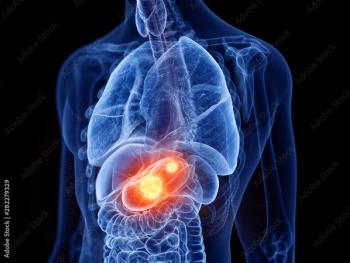
Patients with locally advanced gastric cancers saw complete response rates of 18.3% from camrelizumab and rivoceranib plus chemotherapy.

Unloxcyt was approved by the FDA as a new treatment for patients with locally advanced or metastatic cutaneous squamous cell carcinoma.

Tecentriq plus chemotherapy did not improve event-free survival in triple-negative breast cancer but increased rate of complete tumor removal.

As a survivor of MDS, I’ve learned to make the best of every day and to be thankful for life. Sometimes this means avoiding others who are less grateful.
From Gerry Turner announcing he has cancer to the return of a Chicago Cubs legend’s disease, here’s what’s happening in the cancer space this week.
Patients with high-risk, HR-positive, HER2-negative breast cancer treated with HER3-DXd with or without Femara (letrozole) experienced fewer side effects than with chemotherapy.