



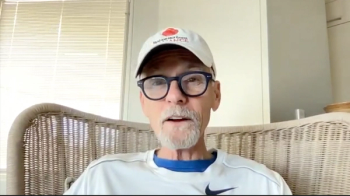
After surviving cancer and the many bad days that come with a diagnosis, voice actor Rob Paulsen noted that he had a newfound sense of empathy that helped him out of some of his darkest days.
After surviving cancer and the many bad days that come with a diagnosis, voice actor Rob Paulsen noted that he had a newfound sense of empathy that helped him out of some of his darkest days.

As a melanoma advocate, I realized that people of color often are not included in research or properly understand their risks for skin cancer. Here’s what I’m doing to change that.

From liver cancer survivor planning to run the upcoming Boston Marathon with his organ donor to a common HIV drug showing promise in treating colorectal cancer, here’s what’s happening in the cancer space this week.
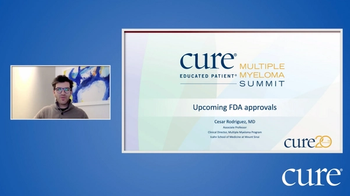
Watch Dr. Cesar Rodriguez, of the Multiple Myeloma Program at the Ichan School of Medicine at Mount Sinai, discuss upcoming FDA approvals in the space, during the CURE Educated Patient Multiple Myeloma Summit.

A phase 2 trial will investigate LTX-315 in patients with basal cell carcinoma, the most common form of skin cancer.

The presence of cancer in the lymph nodes may not be the strongest indicator of the need for adjuvant chemotherapy in older women with breast cancer, according to recent study results.
I have a lipoma on my back, and since I’m worried about both the aesthetics and potential malignancy of the fatty tumor, I’ve decided to have it removed.

The first patient was dosed in an early-phase trial evaluating the investigational cell therapy DeTIL-0255 for the treatment of advanced ovarian, cervical and endometrial cancer.
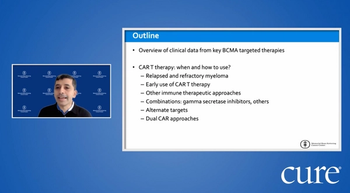
Watch Dr. Sham Mailankody, from Memorial Sloan Kettering Cancer Center, discuss CAR and BiTE therapy, during the CURE Educated Patient Multiple Myeloma Summit.

Researchers have treated the first patient in the PRECISION 1 trial with Fyarro to assess the drug’s efficacy across several endpoints including survival among more than 100 patients with solid tumors that exhibit certain genetic alterations.

The COVID-19 pandemic brought on a huge surge in the use of telemedicine for cancer care, but now as the pandemic is slowing down, an expert said that there are certain times when telemedicine will do, while other situations warrant an in-person visit with the doctor.
Going through the COVID-19 pandemic with a cancer diagnosis made me feel jittery, and I know that many others felt the same way, too.

An upcoming phase 2 study will explore if the transdermal (through the skin) delivery of a drug commonly used to treat nausea and vomiting will result in no nausea, no vomiting and no use of rescue medicines in patients with cancer receiving chemotherapy.
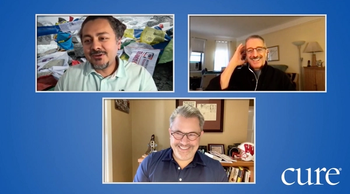
Watch Dr. Saad Z. Usmani, Dr. Ben Marcus and Stan Wagner discuss their participation in the Moving Mountains for Multiple Myeloma program, during the CURE Educated Patient Multiple Myeloma Summit.

The plan is to assess the safety and efficacy of the genetically engineered cell therapy alongside high-dose chemotherapy and blood stem cell transplantation in approximately 150 patients with lymphoma.

Monumental treatment advancements over the past two decades have given patients with thyroid cancer the ability to live longer and better lives, according to an expert from Cleveland Clinic’s Taussig Cancer Institute. However, more work is needed to find curative treatments.

After being diagnosed with cancer, I scoured the internet for ways to live as long as possible and found some helpful tips and not-so-helpful “cures.”

“Combination therapy with (Opdivo) plus (Yervoy) warrants further studies in the preoperative setting for patients with resectable hepatocellular carcinoma, which could transform the role of immunotherapy from palliative treatment in the metastatic setting to curative treatment in localized disease,” the study authors wrote.
Watch Kristie L. Kahl, Donna and Jack McNutt, Dr. Noopur Raje, and Grace Allison, discuss treating myeloma long term, during the CURE Educated Patient Multiple Myeloma Summit.

A patient with an advanced solid tumor was given their first dose of a novel antibody, kicking off a phase 1/1b study comparing this drug with or without Keytruda in patients with several types of solid tumors.

Certain patients with metastatic breast cancer may benefit from Enhertu compared with standard of care with Kadcyla despite higher rates of side effects including lung inflammation and interstitial lung disease.

When visiting the cancer center (or any other health care center), the people who greet me at the front desk can have a major impact on the whole experience.
The FDA’s decision to approve Yescarta in patients with large B-cell lymphoma that has failed to respond to first-line treatment is based on data that showed that the use of the CAR-T cell therapy resulted in a significant increase in patients who were alive at two years compared with the standard-of-care second-line treatment.
Watch Dr. Saad Z. Usmani, Dr. Krina K. Patel, Dr. Noa Biran, and Jenny Ahlstrom, answer audience Q&A during the CURE Educated Patient Multiple Myeloma Summit.
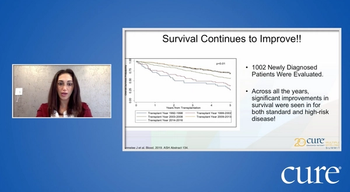
Watch Dr. Noa Biran, an associate professor of medicine in the division of multiple myeloma at The John Theurer Cancer Center at Hackensack University Medical Center, discuss treatment for relapsed/refractory myeloma.
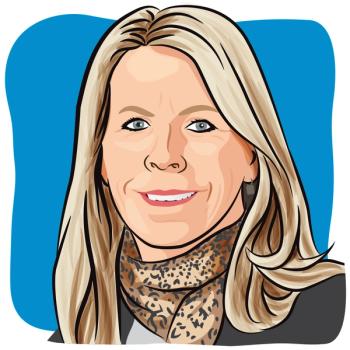
The year 2022 has already been filled with obstacles and heartache — as well plans for a new cancer treatment — but I’m putting away the bad thoughts to get ready for the fight ahead of me.
Watch Dr. Krina K. Patel, an associate professor and center medical director for the Department of Lymphoma-Myeloma at The University of Texas MD Anderson Cancer Center discuss treatment for newly diagnosed myeloma.
In CURE’s Speaking Out video series, on behalf of Living Beyond Breast Cancer, Andrea Kassem discusses integrative care in metastatic breast cancer.
In CURE’s Speaking Out video series, on behalf of Living Beyond Breast Cancer, Dr. Nancy Lin discusses treatment planning for patients with breast cancer that has metastasized to the brain.
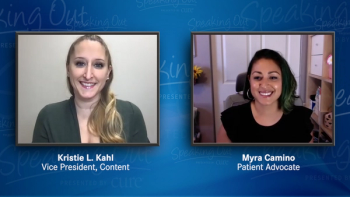
In CURE’s Speaking Out video series, on behalf of Living Beyond Breast Cancer, Myra Camino discusses her experience as a patient advocating for herself after her stage 4 metastatic breast cancer diagnosis.