

Singer-songwriter Andrew McMahon is not the same person he was before his leukemia diagnosis, and that’s OK, he said.
Singer-songwriter Andrew McMahon is not the same person he was before his leukemia diagnosis, and that’s OK, he said.

It is essential for patients to live a healthy lifestyle while undergoing treatment for multiple myeloma, an expert said.
An expert discusses the ongoing SPARK trial for KRASG12-mutant non-small cell lung cancer, and what she hopes for the future of this patient population.

Watch Dr. Rami Komrokji and Dr. John O. Mascarenhas answer questions about myelofibrosis during the CURE® Educated Patient® MPN Summit.
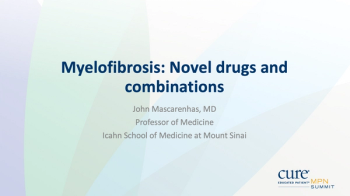
Watch Dr. John O. Mascarenhas, from Icahn School of Medicine, discuss novel therapies in myelofibrosis during the CURE® Educated Patient® MPN Summit.
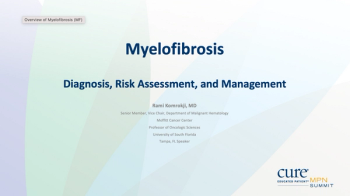
Watch Dr. Rami Komrokji, from Moffitt Cancer Center, discuss risk stratification and management of myelofibrosis during the CURE® Educated Patient® MPN Summit.
Watch Dr. Nikolai Podoltsev, Dr. Jerry Spivak and Amy Lane answer questions about polycythemia vera during the CURE® Educated Patient® MPN Summit.

Most patients with nonmetastatic castration-resistant prostate cancer were able to stay on their therapies long-term, research showed.
CAR-T cell therapies have not always been easy to access for patients with myeloma, though that is slowly changing, an expert explained.

Patients with non-small cell lung cancer who cleared 50% or more of cancerous DNA from their blood by their fourth treatment cycle tended to have better outcomes on maintenance therapy, research showed.
Longer follow-up data showed that Lenvima plus Keytruda still outperformed Sutent in the treatment of patients with advanced renal cell carcinoma.
It may be more beneficial to reduce the dose of Verzenio rather than stop the drug altogether, according to the monarchE trial findings.
Acupuncture reduced pain “in a very significant way” and urinary symptoms for patients with non-muscle invasive bladder cancer who were undergoing BCG therapy.

The third and final installment of the CURE® Open Mic Showcase features comedy, essay readings and videos from patients with cancer.

Marlana M. Orloff, MD, offers advice for patients who are diagnosed with metastatic uveal melanoma.
An expert on uveal melanoma reviews the treatment protocol for tebentafusp, which is approved for the treatment of metastatic disease.
Marlana M. Orloff, MD, discusses key efficacy data and reviews adverse events seen with tebentafusp in patients with metastatic uveal melanoma.
Dr Marlana M. Orloff provides an overview of the treatment landscape for metastatic uveal melanoma.
An expert on uveal melanoma discusses the presentation, diagnosis, and prognosis of the disease.
Marlana M. Orloff, MD, gives a brief overview of uveal melanoma, including its incidence and risk factors.
Patients with cancer often experience loneliness, and the COVID-19 pandemic helped the general public better understand what that isolation felt like, an expert said.

As part of its Speaking Out video series, CURE spoke with Monica Fawzy Bryant, Esq., from Triage Cancer, about how to better manage medical bills following a cancer diagnosis.

As part of its Speaking Out video series, CURE spoke with Joanna Fawzy Morales, Esq., from Triage Cancer, about choosing and using health insurance before, during and after a cancer diagnosis.
As part of its Speaking Out video series, CURE spoke with Joanna Fawzy Morales, Esq., from Triage Cancer, about working during a cancer diagnosis and its treatments, and what rights individuals have when it comes to employment and insurance.
As part of its Speaking Out video series, CURE spoke with Joanna Fawzy Morales, Esq., from Triage Cancer, about policies around taking extended time off from work for patients with cancer and their caregivers.
As part of its Speaking Out video series, CURE spoke with Monica Fawzy Bryant, Esq.,, from Triage Cancer, about planning ahead after a cancer diagnosis.

The second installment of CURE®’s Open Mic Showcase features cancer survivors performing original songs, showcasing a handmade deck of cards and reading poetry.
Research showed a survival improvement in adolescent and young adult cancer survival after the Dependent Care Expansion allowed patients to be on their parents’ insurance until the age of 26.

From music to poetry and dynamic storytelling, the first installment of CURE®’s Open Mic Showcase highlights the talents of patients and survivors of cancer.
Men with low-risk prostate cancer can usually safely forego treatment as long as they continue to monitor their disease with their clinicians, an expert said.