
Watch Dr. Suchita Pakkala, from Emory University School of Medicine, discuss estrogen receptor-positive disease, during the CURE Educated Patient Metastatic Breast Cancer Summit.
Watch Dr. Suchita Pakkala, from Emory University School of Medicine, discuss estrogen receptor-positive disease, during the CURE Educated Patient Metastatic Breast Cancer Summit.
Dr Thomas Hutson shares his experience with tivozanib in his practice and ways to counsel patients regarding treatment options in the third-line setting.
Dr Thomas Hutson reviews the adverse event profile of tivozanib and provides advice to community oncologists on how to best manage these toxicities.
Watch Dr. Jeremie Calais, Dr. Tian Zhang, Dr. Landon C. Brown and Jim Rosenfield answer questions about novel agents and strategies during the CURE Educated Patient Prostate Cancer Summit.
Watch Dr. Landon C. Brown, from Atrium Health Levine Cancer Institute, discuss approaches to hormone therapy, during the CURE Educated Patient Prostate Cancer Summit.
Dr Thomas Hutson reviews the TIVO-3 trial, including the most recent data that was presented at ASCO GU.
An overview of the treatment options available for patients with renal cell carcinoma (RCC).
Watch Dr. Tian Zhang, from UT Southwestern Medical Center, discuss novel agents, during the CURE Educated Patient Prostate Cancer Summit.
Watch Dr. Jeremie Calais, from UCLA, discuss novel imaging strategies, during the CURE Educated Patient Prostate Cancer Summit.
Watch Dr. Veda N. Giri, Dr. Umang Swami and Sue Friedman answer questions about genetics and genomics during the CURE Educated Patient Prostate Cancer Summit.
Watch Dr. Umang Swami, from Huntsman Cancer Institute, discuss genomic changes and PARP inhibitors, during the CURE Educated Patient Prostate Cancer Summit.
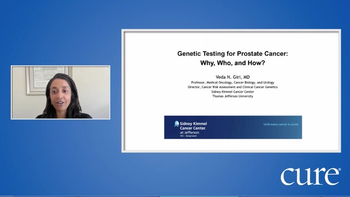
Watch Dr. Veda N. Giri, from Sidney Kimmel Cancer Center at Thomas Jefferson University, discuss genetic testing and who should get it, during the CURE Educated Patient Prostate Cancer Summit.
Watch Dr. Ganesh Raj, Dr. Andrew Z. Wang, and Bruce Williams, discuss treatment for localized disease, during the CURE Educated Patient Prostate Cancer Summit.
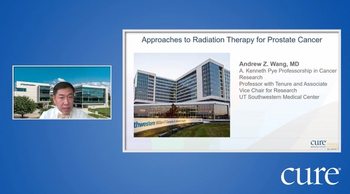
Watch Dr. Andrew Z. Wang, from UT Southwestern Medical Center, discuss approaches to radiation for local disease, during the CURE Educated Patient Prostate Cancer Summit.
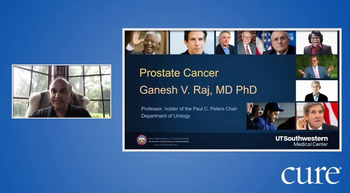
Watch Dr. Ganesh V. Raj, from UT Southwestern Medical Center, discuss surgery for localized disease, during the CURE Educated Patient Prostate Cancer Summit.
An overview of metastatic castration-resistant prostate cancer (mCRPC) and the role of PSMA in mCRPC.
As part of its Speaking Out video series, CURE spoke with Dr. Navya Nair, on behalf of the Foundation for Women’s Cancer, about genetics in women’s cancer.
As part of its Speaking Out video series, CURE spoke with Dr. Navya Nair, on behalf of the Foundation for Women’s Cancer, about access to care in women’s cancer.
As part of its Speaking Out video series, CURE spoke with Dr. Navya Nair, on behalf of the Foundation for Women’s Cancer, about survivorship in women’s cancer.
As part of its Speaking Out video series, CURE spoke with Dr. Navya Nair, on behalf of the Foundation for Women’s Cancer, about maintaining a healthy lifestyle in women’s cancer.
Before closing out their discussion on treatment for EGFR Exon 20–Positive NSCLC, experts discuss prominent unmet needs in this setting.
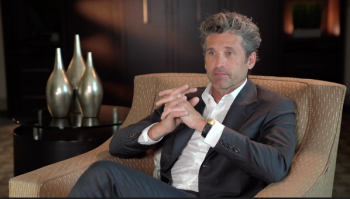
Actor and cancer advocate Patrick Dempsey predicts that more focus will be put on complementary cancer care, such as nutrition and environmental factors, over the next several years.
Myelofibrosis may cause major impairments to a patient’s quality of life, which is why it is pertinent that patients work with their clinicians to address these side effects.
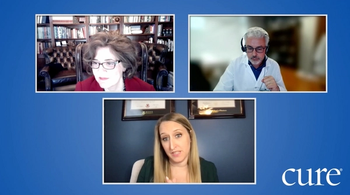
Watch Dr. Jamile Shammo and Dr. Srdan Vestovsek answer questions about disease approaches during the CURE Educated Patient MPN Summit.
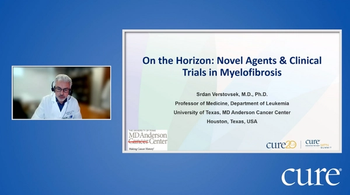
Watch Dr. Srdan Vestovsek, from The University of Texas MD Anderson Cancer Center, discuss novel agents and clinical trials in myelofibrosis, during the CURE Educated Patient MPN Summit.
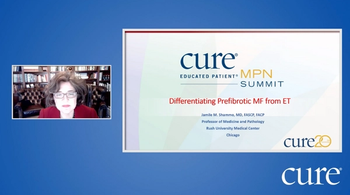
Watch Dr. Jamile Shammo, from Rush University Medical Center, discuss differentiating an essential thrombocythemia diagnosis, during the CURE Educated Patient MPN Summit.
Watch Dr. Jamile Shammo, Dr. Angela Fleishman and Kapila Viges answer questions about clinical trials during the CURE Educated Patient MPN Summit.
A shared discussion on the importance of enrolling in clinical trials for EGFR exon 20–positive NSCLC and improving access to novel therapy for patients.
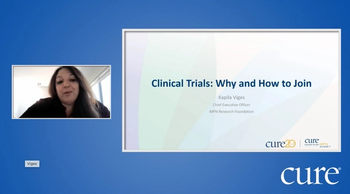
Watch Kapila Viges, from the MPN Research Foundation, discuss clinical trials, during the CURE Educated Patient MPN Summit.
A focused conversation on how a patient can maintain and improve quality of life while receiving therapy for non–small cell lung cancer.