
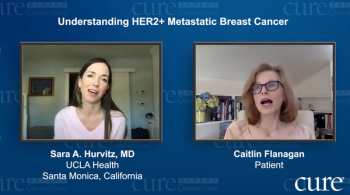
Caitlin Flanagan, a patient with HER2+ metastatic breast cancer, describes her experience learning about the surplus of treatment options and how she overcame her initial apprehension.
Caitlin Flanagan, a patient with HER2+ metastatic breast cancer, describes her experience learning about the surplus of treatment options and how she overcame her initial apprehension.
Caitlin Flanagan, a patient with HER2+ metastatic breast cancer, shares her initial impression of when she was diagnosed.
Sara A. Hurvitz, M.D., describes the subtypes, staging and grading of breast cancer.

View the full CURE Educated Patient Multiple Myeloma Summit on demand.

George Valentine needs something from his elected representatives in Congress: securing predictable annual out-of-pocket costs under Medicare Part D’s prescription drug plan.
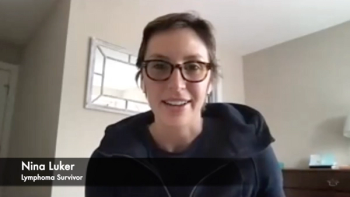
Nearly one year ago to the day, 24-year-old Nina Luker was completely blindsided by a diagnosis of non-Hodgkin lymphoma. But after powering through treatments in the thick of the COVID-19 pandemic, Luker is now cancer-free and offering advice to those who may be looking for ways to help their loved ones through difficult times of their own.

View the full CURE Educated Patient Breast Cancer Summit on demand.

View the full CURE Educated Patient Lung Cancer Summit on demand.
While it is important to educate oneself after receiving a diagnosis of cancer, it’s also critical to know when to step away and find a balance between cancer and life, according to Diane Zipursky-Quale.

Positive results from the phase 3 CLEAR clinical trial, presented at the 2021 ASCO Genitourinary Cancers Symposium, are just one more dataset that could offer “a sense of hope and promise” for patients with advanced renal cell carcinoma (RCC), says the study’s lead author, Dr. Robert J. Motzer.

Breast cancer survivor and Evofem Biosciences founder and CEO Saundra Pelletier shares her thoughts on a new hormone-free contraceptive gel that could improve sexual quality of life in patients with cancer.
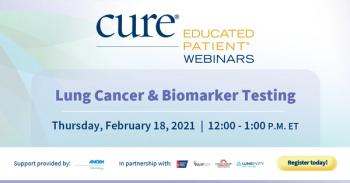
Watch CURE®'s EDUCATED PATIENT® Webinar: Know Your Lung Cancer: Accelerating Education and Access for Biomarker Testing.
Ahead of the release of their book, “Off Our Chests”, Dr. John Marshall and his wife, Liza, look back on the trials and tribulations of Liza’s triple-negative breast cancer diagnosis – from the perspective of a patient and her husband, the caregiver and oncologist.

For patients to maintain or improve their quality of life through their cancer treatment, it is pivotal that they communicate with their health care team.
Clinical trials remain the gold standard when it comes to finding new treatment options for patients, particularly when it comes to renal cell carcinoma. But even if the results are positive and this combination proves to be beneficial, patients should still discuss all of their options with their oncologist to find the right sequence of treatment, says one expert.