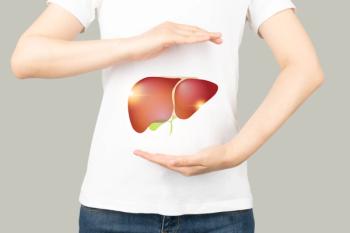
In the phase 3 ASAC trial, daily aspirin did not lower the risk of colorectal cancer returning after treatment for liver metastases, and serious side effects were more common.
CURE spoke with advocate Karen Hoyt about liver cancer, liver disease, and liver health, highlighting silent risk, misconceptions and need for awareness.
Liver cancer remains a significant global health challenge and can develop silently in patients who are unaware they have underlying liver disease. To discuss this unmet need in cancer care, CURE sat down with Karen Hoyt to discuss liver health, liver cancer, and liver disease, including why awareness are so critical.
In this Q&A, Hoyt shares her personal journey, the misconceptions she frequently encounters, and how lived experience has shaped her advocacy. She is an author, educator, speaker, and an advocate for patients with liver disease and liver cancer.
Hoyt: Well, for me, this work is deeply personal because it's really the core of who I am. I was a baby boomer and a young grandmother moving into what I thought were my golden years. I was cycling on the Arkansas River, and that night my liver failed. We didn't know that I had been living with end-stage liver disease because I was being healthy. I mean, I ate some junk food, but I ate pretty healthy most of the time. My liver failed overnight, but when I was first hospitalized, I turned yellow and my whole body blew up.
My eyes turned yellow, and I found out that I needed two blood transfusions. I thought I'd had a stomach bug and I was throwing up red Jell-O, but it turned out that I had been throwing up blood for two weeks. Due to the liver failure, my brain also failed, and I didn't recognize what was happening. Liver disease is a silent disease, and that makes it a little bit tricky to diagnose.
Oftentimes patients reach that end stage without any knowledge that they've even got liver disease at all. There are a lot of myths and disconnects. Immediately, I began to look for what you do for liver disease. I didn't know I had liver disease. What is it? What does this mean? Of course, at the end stage, they had a lot of rules for me to follow, but I was very confused. A lot of it was the hepatic encephalopathy. My family was confused and none of us really knew what to do, so I started a website.
Immediately, I just began to write down my own questions and then the answers to them. Being an educator, I understood that I was able to make sense of a larger topic and turn it into a simple idea. I enjoy tackling a complex topic and then simplifying it, making it easy for me to understand as a patient, just the way I'd always done for my students. It was very natural for me. Then I began putting it on a website and immediately gained a large group of friends who began to come to the website with the same questions I had.
My first Christmas after my liver failed was really sad for my whole family. I laid on the couch and I couldn't eat any of the food that was prepared. I sat there with a really bland bowl of oatmeal because everything had so much sodium in it that my body kept swelling up. I was on so many restrictions that, in a way, it was kind of like my whole family grieved my loss that year because we didn't think I'd live through Christmas.
Now, it's 15 years later, and I just had that spark of hope in the beginning that if I could make this work, if I could let nutrition work on my behalf, combined with a strong relationship with a medical provider, I could live and this wouldn't be the end of my story. Then I began to get other patients to join with me through my website, and 15 years later, I'm still rolling with it. My identity changed the day I was diagnosed because, up until that point, I'd considered myself a fairly healthy person.
When I got liver failure and they said this could lead to liver cancer and that I probably won't survive much longer, and if I did, I'd just get liver cancer, it felt like the end of my life. It was so sudden, and I had to go through all the shock, anger, denial, and the stages of grief. I just had enough hope and determination that I wanted to rewrite my story. Once I did it, I knew other people could too, so I reached out to other patients.
Liver cancer, right now, is the sixth leading cause of cancer in the world, but yet it’s the third leading cause of death from cancer. Those are brand new stats that the CDC just came out with [last] year. So, if you do get any type of cancer, if it’s liver cancer, you’re twice as likely to die than you are from any other cancer. It’s really high. You can look that up on the CDC website. It’s the third leading cause of death of all cancers. It is linked to lifestyle in many cases. Right now, it’s exploding, I think.
Transcript has been edited for clarity and conciseness.
For more news on cancer updates, research and education,