For Blood Cancer Awareness Month, Dr. Guenther Koehne shares why immunotherapy is making this a promising time for people with blood cancers.
For Richard “Rocky” Kimball, a diagnosis of myelodysplastic syndromes, or MDS, necessitated a number of lifestyle changes.
For Richard “Rocky” Kimball, a longtime outdoor enthusiast and endurance athlete in Colorado, a diagnosis of the rare blood cancer myelodysplastic syndromes, or MDS, necessitated a number of lifestyle changes.
While he no longer ascends mountain peaks or runs marathons, Kimball told CURE in an interview that he is still very much engaged and active in his own way.
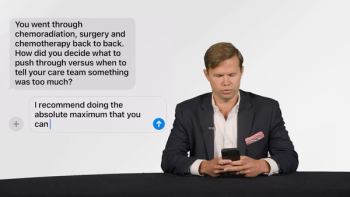
“I think that's really important, to remain engaged. … Isolation is deadly,” he said. “It's more toxic than cancer, perhaps. You have to do it yourself, but you don't have to, and should never, do it alone.”
How did your MDS diagnosis impact your active lifestyle?
My active lifestyle, which began, really in my 20s — I always had a career, so I don't want you to think all I did was goof off — but I grew up in Colorado and went to high school, I fell in love with climbing peaks, so I'd climbed all of Colorado's 14,000-foot peaks at a very young age. I climbed mountains all over the world. I'd run marathons. So, I really enjoyed an active lifestyle.
And so, all of a sudden, I think no matter when you get a cancer diagnosis, all of a sudden it's new terrain. And to some extent, I really had to rebuild and reconstitute my identity, who I was, because I could no longer really do those things. And it was progressive, so at first you're doing shorter hikes and shorter bike rides, certainly my marathon days were well in the past, but I had to relearn. I almost went back to school; my day was much more contained, almost like I had a ball and chain around my leg. It was really my lungs, perhaps.
But, I taught myself to play the piano, so that's music class. And I started studying each day hematology, which I wasn't particularly a science major, but I started to learn that language. I enjoy and read fiction. I'm a journalist, I've always enjoyed writing and poetry. So those were things that I could do that were much less physical, but the natural world remains really important to me. So, every day I call that recess. You get out and you spend a little bit of time. I live in a cabin, and I find the time to get outside, walk in the trees, go sit on a rock, and that's my recess.
And then finally, like every good school student, you need time for others. So, I find time to have a cup of tea or a coffee on my cabin porch. I really try to not just remain in isolation. I think that's really important, to remain engaged, whether it's by email, but isolation is deadly. It's more toxic than cancer, perhaps. You have to do it yourself, but you don't have to, and should never, do it alone.
Transcript has been edited for clarity and conciseness.
For more news on cancer updates, research and education,