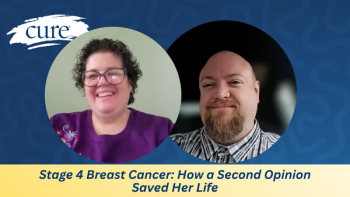
Diagnosed with stage 4 breast cancer weeks after giving birth, Eileen Carter explains why getting a second opinion changed the course of her care.
Dr. Ranee Mehra shares guidance on recurrence, quality-of-life concerns and clinical trials for patients with head and neck cancers and caregivers.
In an interview with CURE, Dr. Ranee Mehra, director of Head and Neck Oncology in the Division of Hematology/Oncology and associate director for Clinical Research at the University of Maryland School of Medicine, shared advice for patients with head and neck cancers and their caregivers who are weighing treatment decisions.
Mehra acknowledged that treatment can be especially difficult, particularly if the cancer recurs after prior efforts to cure the disease. She noted that recurrence can be challenging for patients and caregivers and often brings quality-of-life concerns, including pain, nutrition and speech.
She encouraged patients to learn about all available treatment options and to consider clinical trials, particularly in the recurrent setting. While standard therapies offer benefit, she said there is still room for improvement, and clinical trials are key to developing new approaches.
Mehra added that research in head and neck cancer is entering an exciting phase, with growing interest in bispecific antibodies targeting EGFR. With newer dual-targeting agents, including Rybrevant, investigators are seeing encouraging efficacy in ongoing clinical trials.
Do you have any final thoughts or advice for patients with head and neck cancers or caregivers who are deciding on treatment?
It is very difficult to go through treatment for this type of cancer, especially if there is recurrence after significant effort to cure the disease. That can be challenging for patients and caregivers. There are many quality-of-life considerations, including pain, nutrition and speech. It is important to be aware of available treatment options and to explore clinical trials, particularly in the recurrent setting. While we do have good standard options, there is still room for improvement, and clinical trials help us study new approaches.
We are in an exciting time in head and neck cancer treatment. There is significant interest in studying bispecific antibodies, particularly those targeting EGFR. EGFR has been a target of interest in head and neck cancer for more than 20 years. With the availability of dual-targeting agents, we are seeing greater efficacy in clinical trials. In addition to Rybrevant, there will be data presented on other bispecific agents in ongoing clinical trials.
Transcript has been edited for clarity and conciseness.
For more news on cancer updates, research and education,