Three doctors dismissed Christine Kushner’s breast changes at 37. Trusting her gut and pushing for a mammogram helped save her life.
Only 5% to 10% of breast cancers are caused by inherited gene mutations like BRCA1 or BRCA2. I do not carry one. But my family history was enough.
On Oct. 30, 2024, my husband drove me to the hospital at dawn so I could have my breasts amputated. The medical term is a prophylactic double mastectomy with reconstruction.
This was not a sudden decision. It was not guided by genetic testing but by family history and the fear of what felt like a bomb inside me, waiting to go off.
Only 5% to 10% of breast cancers are caused by inherited gene mutations like BRCA1 or BRCA2. I do not carry one. But my family history was enough. My mother, my two maternal aunts, and later my sister all had breast cancer. For women like me, genetics don’t provide reassurance.
The other complicating factor was dense breast tissue, which roughly half of U.S. women have. Dense tissue makes mammograms less reliable and tumors harder to detect. Despite this, the standard disclaimer I received after every screening was the same: “Your mammogram was clear but, due to density, lesions or tumors may not have been detected.”
As a high-risk patient, my life looked like this:
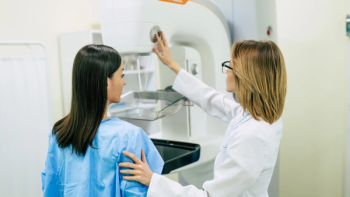
A mammogram every six months, followed by that same disclaimer.
An MRI with contrast every six months, lying face down in the machine for up to 45 minutes. Days later, I would wait for a nurse or doctor to call with the results.
Two tumors biopsied and tagged. Both negative.
Three mammograms showing suspicious lesions that required ultrasound follow-ups.
I was grateful to have insurance, but each test sent me into a spiral. And when I decided surgery was the right choice, the first challenge was with my insurance company. Preventive surgery is often treated as elective, even when family history makes the risk obvious. The second challenge was with my father, a retired physician, who thought my decision was drastic. He wanted to protect me from major surgery. What he did not live with was the fear that came with being high risk.
The turning point came in May 2024, when my sister had her first MRI at the age of 44.A cancerous tumor was found early. She had a double mastectomy with spacers for reconstruction. She has two young sons. I know she was thinking of them when she made her decision. Her diagnosis sealed mine.
The surgery was painful. Recovery was hard. My breasts have no feeling. My mind and even my posture struggled to adapt. But I have not regretted this decision for a single day.
Since my surgery, an acquaintance has been diagnosed. A close friend is now living with stage 4 metastatic breast cancer. This disease keeps taking women’s lives. One in eight women in the United States will develop breast cancer in their lifetime.
Awareness campaigns often focus on early detection and survivorship. Those are vital, but prevention deserves equal attention. Women need access to genetic testing. They need to know if they have dense breast tissue. They need insurance coverage that supports — not blocks — preventive decisions.
For me, surgery was not about treatment. It was about survival.
Get the mammogram. Get the MRI. Get the genetic testing. Get informed.
This piece reflects the author’s personal experience and perspective. For medical advice, please consult your health care provider.
For more news on cancer updates, research and education,