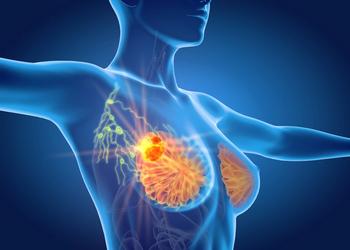
The FDA has cleared TumorSight Risk, software that uses a patient's existing breast MRI, pathology and clinical information to estimate the chance that early HR-positive, HER2-negative breast cancer will come back within five and 10 years.
New research suggests biologic aging and neighborhood-related stress may affect how aerobic exercise influences cognition after breast cancer treatment.
Some postmenopausal women with breast cancer may respond differently to aerobic exercise-based cognitive interventions depending on biologic aging and neighborhood-related socioeconomic stress, according to findings presented at the
Researchers from the University of Pittsburgh analyzed data from the EPICC clinical trial to better understand how aerobic exercise, biologic aging and area deprivation may interact to affect cognition in breast cancer survivors.
The study, “Linking Aerobic Exercise, Area Deprivation, Epigenetic Age Acceleration, and Cognition in Postmenopausal Women with Breast Cancer: Results from EPICC Trial,” was presented by Myeong-ga Cho, MSN, RN.
Many patients with breast cancer experience cognitive changes during or after treatment, including trouble concentrating, memory problems and difficulty multitasking.
“Cancer and cancer treatment may cause faster biological aging, and that aging may harm cognitive health,” Cho said during the presentation. “Biological age and chronological age do not always match, and some people age faster.”
Researchers wanted to better understand why some patients may benefit more than others from supportive interventions like aerobic exercise.
The study included 116 postmenopausal women with breast cancer enrolled in the EPICC randomized clinical trial (NCT02793921). Participants either completed a 6-month aerobic exercise program or received usual care.
Researchers evaluated participants’ cognition alongside measures of biologic aging and neighborhood deprivation.
The study focused on “epigenetic age acceleration,” which refers to biologic aging that occurs faster than expected based on a person’s chronological age. Researchers measured this using several blood-based DNA methylation “clocks,” including PhenoAge, BrainAge and GrimAge.
Cho explained that “DNA methylation is the most rigorous indicator of biological aging currently,” adding that epigenetic clocks use methylation patterns “to estimate biological age or the pace of aging.”
Investigators also used the Area Deprivation Index (ADI), which measures neighborhood-level disadvantage based on factors such as income, education, housing and employment.
Higher ADI scores were associated with faster biologic aging at the start of the study, suggesting that social and environmental stressors may influence long-term health in breast cancer survivors.
“Women in more deprived areas were not just aging more quickly ... but in their active rate of aging,” Cho said.
Overall, aerobic exercise did not significantly improve biologic aging compared with usual care across the entire study population. However, exercise appeared to have greater benefit among participants living in less disadvantaged neighborhoods.
“So socioeconomic environment may shape the extent to which women benefit on their biological aging from exercise,” Cho noted.
Researchers also found that biologic aging appeared to influence cognitive responses to aerobic exercise differently depending on the area of cognition being measured.
For example, some women with higher biologic aging measures experienced less improvement in verbal memory after aerobic exercise, while others showed greater improvement in attention.
The findings suggest that aerobic exercise may not affect every patient — or every cognitive symptom — in the same way.
According to investigators, cancer-related stress and treatment effects may accelerate biologic aging and influence how patients respond to supportive interventions like aerobic exercise.
“The hypothesis is that exercise may improve cognition partly through decreasing accelerated aging,” Cho said. However, “we do not know how exercise and area deprivation jointly influence biological age acceleration and cognitive function.”
The researchers said identifying these patterns may eventually help clinicians develop more personalized supportive care strategies for breast cancer survivors experiencing cognitive difficulties after treatment.
Although additional research is needed, the findings highlight the complex relationship between aerobic exercise, biologic aging and cognitive health in cancer survivorship.