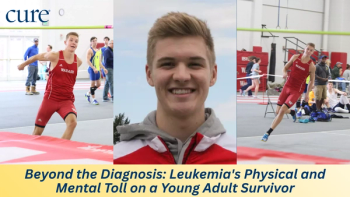
Six years after being diagnosed with B-cell ALL at 21, William Yank opens up about the physical changes of treatment, the emotional weight of constant care and the role hope plays in his survivorship.
Oncology physical therapist Dr. Leslie Waltke demonstrates calf raises, a simple at-home exercise to help rebuild lower body strength during cancer treatment.
When it comes to rebuilding strength during or after cancer treatment, starting simple is often the smartest approach. This week, oncology physical therapist Dr. Leslie Waltke demonstrates calf raises, a straightforward lower body exercise that can be done at home with nothing more than a chair or wall for support.
To get started, stand with your feet pointing straight ahead, positioned directly under your hips. Lightly hold onto a chair back or place your hand flat against a wall, just enough to keep your balance. From there, slowly lift your heels off the floor, pause briefly at the top of the movement, then lower back down with control. That rhythm lift, pause, lower is what makes the exercise effective. Rather than rushing through the repetitions, the goal is to move deliberately, letting your calf muscles do the work on both the way up and the way down.
For patients who are ready for a bit more of a challenge, Dr. Waltke suggests progressing to single-leg calf raises. By lifting one foot slightly off the ground and performing the movement on one leg at a time, you increase the demand on the working leg and begin building greater strength and stability. It is a natural next step once the two-legged version starts to feel manageable.
As with most exercises during cancer treatment and recovery, the key is starting at a level that feels safe and building gradually from there. Dr. Waltke recommends beginning with 5 to 10 repetitions and increasing over time as your strength improves. The longer-term goal is to work up to 25 to 30 repetitions, a range that reflects meaningful progress and a solid foundation of lower body strength.
For more news on cancer updates, research and education,