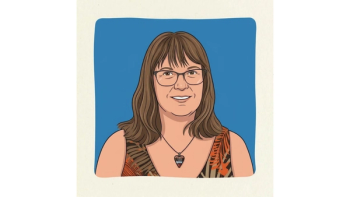
Choosing hospice care brought comfort, support and precious time for one family as they navigated cancer, caregiving and bringing a loved one home.
Sixteen years after treatment, cancer fatigue is still my constant shadow. I can't cure it, so I've learned to manage it instead of letting it manage me.
Despite media coverage to the contrary, several magazines like CURE have addressed the fact that most cancer survivors don't miraculously become cured and life goes back to where it was before we became sick. We are often given a lifelong sentence.
I am a 16-year cancer survivor and know how lucky I am to be alive. I thank God every single day for being alive because of scientists and research, great doctors and nurses, and God.
What does jolt me, however, is that I still have long-term side effects including my hearing loss from chemotherapy, which devastates me. The pulling of over a dozen teeth was traumatic, plus the inability to get dentures or implants because of weak gums saddens me. The idea I would have treatments every month for 16 years was never what I expected. And the worst side effect is the constant fatigue from a failure of the red blood cells to flow through the arteries. The medication I am on presently is a miracle because it allows the red blood cells to get through the arteries and keeps me alive. However, the blood feels like it is constantly pushing and I never feel nontired (if that is a word). The fatigue is often crippling. Every month I am asked by medical personnel at the cancer center if I suffer from fatigue, and my answer is "constantly." It is not the type of fatigue that one gets from the loss of a night's sleep. It is the kind where I must stop in the middle of tasks unexpectedly and just go sit down. It is exasperating and can be dangerous if I ignore the tiredness and do not pace myself.
Many of my friends with cancer will say the side effects are worse than the disease. Yet, I am fortunate because the newer treatments I receive are so much easier with fewer side effects than 16 years ago.
But what do you do about fatigue? It is not something that can be cured or lessened with a pill, IV or injections. It is like the shadow hanging over our heads. That is exactly how fatigue feels for many cancer survivors.
All I can do is manage it. I must succumb (I hate that word, but it fits) and accept the idea that I must do fewer chores, projects and socializing, and less of what I want. I carefully choose the activities I need to do in a day and those I want to do, and separate them out. My friends and family have been helping me with decluttering and carrying stuff since I can no longer do that. It is hard to ask, but it is my own pride that gets in my way.
We cannot cure or eliminate fatigue, but we can manage it. As I get older and more arthritic, I find this true with other diseases too. There is no cure for arthritis, and I have plenty of it. But physical therapy, occupational therapy and daily exercises keep me walking and moving. I try to manage it rather than allow it to manage me.
Perhaps a mantra all of us can use to adjust to any disease or illness is this one: "The disease(s) cannot manage me, but I need to manage it!"
For more news on cancer updates, research and education,