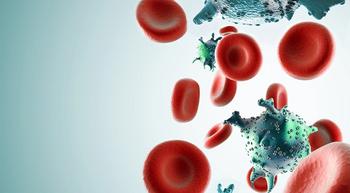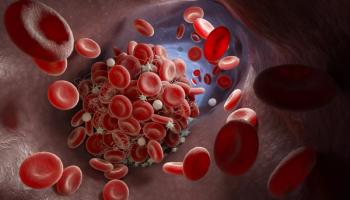
For Blood Cancer Awareness Month, Dr. Guenther Koehne shares why immunotherapy is making this a promising time for people with blood cancers.
Dr. Priscilla Merriam discusses how sarcomas can be mistaken for benign growths like lipomas and fibroids, and why asking about a biopsy can matter before surgery.
Sarcomas can be mistaken for harmless lumps, and that can delay a diagnosis, according to Dr. Priscilla Merriam, medical oncologist and clinical director of the Sarcoma Center at Dana-Farber Cancer Institute.
Merriam explained that people often notice a mass or lump growing and assume it is normal. Others learn about a growth incidentally, when a CT scan ordered for an unrelated reason picks something up. Since physicians do not encounter sarcomas frequently, she noted, they may have difficulty interpreting what they are seeing. Most masses are benign (a lipoma or another noncancerous growth) and a patient may be told to watch it, or that nothing needs to be done.
If a physician believes a growth is benign, the assumption can affect surgical planning. Merriam adds they may plan to remove it the way a benign growth would be removed rather than how a cancerous one would be.
She pointed to leiomyosarcoma, one of the sarcoma types seen frequently, which arises in areas where smooth muscle normally develops. Many women are told they have a fibroid, a smooth muscle growth in the uterus, and the vast majority of fibroids are benign. In some instances, though, the growth represents a cancerous version of that growth which is called a leiomyosarcoma within the uterus. Merriam and her colleagues have been working to determine whether elements on MRI of the uterus can help radiologists and surgeons determine in advance whether a growth carries a risk of being a leiomyosarcoma or is more likely benign, so that the most appropriate surgery can be planned ahead of time.
Because sarcomas can be confused with benign growths from the start, a timely diagnosis can be challenging, Merriam said. She encouraged patients to ask questions such as whether anything about the situation seems unusual, and whether a biopsy is needed to understand what the growth is before decisions about treatment move forward.
For more news on cancer updates, research and education,