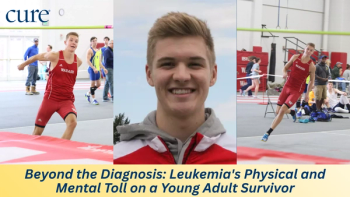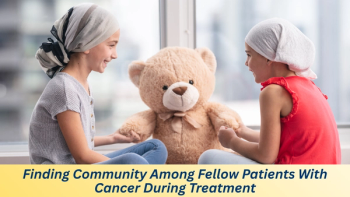
A leukemia survivor recalls how bonding with other patients helped his hospital stays go by faster and became a key part of his emotional healing.
Dr. Ginger J. Gardner highlights the vital role of caregivers in cancer care, emphasizing support gaps, shared experiences and patient-centered solutions.
Ginger J. Gardner, MD, FACOG, is a gynecologic oncologist and surgeon at Memorial Sloan Kettering Cancer Center, where she specializes in treating uterine, ovarian, cervical and other gynecologic cancers. With more than 16 years of experience, she is known for her expertise in minimally invasive and robotic surgery, as well as her commitment to patient-centered care and research.
In addition to her clinical work, Gardner is a leader in the field, serving in national roles with the Society of Gynecologic Oncology and the Foundation for Women’s Cancer, where she focuses on improving outcomes and amplifying patient experiences.
In her discussion, Gardner emphasizes that caregivers are not secondary—they are essential. While cancer care often focuses on the patient, she highlights the emotional and physical toll on those supporting them.
“It’s exhausting… for the patient and the family,” she says, pointing to the long, uncertain hours caregivers spend waiting during procedures and navigating the unknown alongside their loved ones.
These moments, she suggests, reveal how deeply caregivers are affected—yet their experience is often overlooked in traditional care models.
Gardner introduces a powerful way to understand the caregiver role through an “orbit” model. The patient is at the center, surrounded by layers of support—partners, family members, friends and broader community networks.
But she challenges the idea that all support flows inward. “Those arrows actually reflect back out again,” she explains, meaning patients are also supporting those around them, even during treatment.
This reframes cancer care as a shared experience, not an individual one.
One of the most striking insights is that patients often remain caregivers themselves. Gardner describes how individuals must still parent children, communicate difficult news and maintain relationships, even while managing their own diagnosis.
This creates a dynamic where care is constantly exchanged—emotionally and practically—between patients and their support systems.
Gardner also highlights a critical gap in care: not every patient has a caregiver.
“Thirty-nine percent of patients say they don’t have a caregiver… they don’t have orbit one,” she says.
This statistic underscores the need for stronger community and institutional support systems, particularly for patients navigating cancer alone.
Ultimately, Gardner’s message is clear: supporting caregivers is part of supporting patients. Caregivers are deeply embedded in the cancer journey, and recognizing their role is essential to improving outcomes.
As cancer care continues to evolve, her perspective calls for a broader, more inclusive approach—one that acknowledges not just the patient at the center, but the entire network surrounding them.
For more news on cancer updates, research and education,