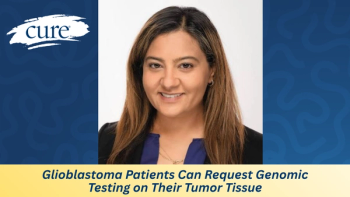
Gita Kwatra, PharmD, MBA, co-founder and CEO of the Glioblastoma Foundation, explains what happens to tumor tissue after brain surgery and how patients can ask their care team for genomic testing.
Discover CURE’s online series with biomarker testing insights, at-home cancer exercises, and Text a Survivor peer support for real-time guidance and hope.
As the leaves begin to turn, we are glad to bring you the fall issue of CURE magazine. But this issue is also a reminder of something we believe deeply: Your care and your community don’t live only on the printed page. They live in videos you can watch between doctor visits, in a text message from someone who has been where you are, in a five-minute exercise you can do at home. This issue highlights three of those series, and we hope you will seek them out at curetoday.com.
Our Speaking Out video series recently tackled a question that can shape everything that follows a diagnosis: why biomarker testing matters before treatment begins. Leah Phillips was 43, healthy and raising three young children when she received a lung cancer diagnosis. Her community oncologist was ready to start chemotherapy and immunotherapy immediately, but a connection to Vanderbilt’s thoracic oncology team convinced her family to wait for comprehensive biomarker results first. Those results revealed an EGFR exon 19 mutation, opening the door to a targeted therapy that has kept her cancer controlled for more than six years. “These 14 days, if you can distract yourself and get yourself in order, could save your life,” she says.
Our Exercise of the Week series keeps movement front and center, with routines built specifically for people living with cancer and beyond. Oncology physical therapist Dr. Leslie Waltke recently walked us through the wall push-up: a simple, no-gym-required move for rebuilding upper back and chest strength, with a clear path to progress as you get stronger. Her message is one we love — movement is not about chasing performance; it is about reclaiming function and feeling steady in your own body again, whatever stage of treatment or survivorship you are in.
And in Text a Survivor, we connect readers directly with someone who has lived the questions they are asking. Fourteen years after a rare Burkitt-like B-cell lymphoma diagnosis, Edward Miskie answered real questions from patients, survivors and caregivers — on fear of recurrence (“it does get better”), on asking for help without guilt and on what he would text his own newly diagnosed self: “Everything is going to be OK.” It’s peer support in the format so many of us actually use every day.
Three series, three formats and one purpose: making sure information and connection reach you however you need them. A printed feature can go deep. A video can put you face-to-face with an oncologist or a survivor. A text can meet you at 2 a.m. when a question won’t wait. We build all of it because you have told us that knowledge and community both matter to living well with cancer.
I encourage you to visit curetoday.com to explore these series in full and to let us know what you would like to see more of. This magazine is one part of a much larger conversation, and we are glad to have you in it.