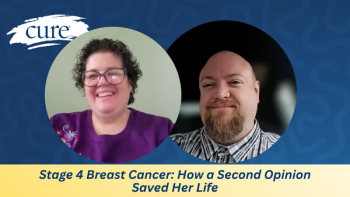
Diagnosed with stage 4 breast cancer weeks after giving birth, Eileen Carter explains why getting a second opinion changed the course of her care.
New EGFR-targeting combos may improve response rates and durability for patients with head and neck cancer.
In an interview, Dr. Ranee Mehra, Director of Head and Neck Medical Oncology at the University of Maryland Marlene and Stewart Greenebaum Comprehensive Cancer Center and professor of medicine at the University of Maryland School of Medicine, discussed how evolving strategies targeting EGFR, or epidermal growth factor receptor, are shaping treatment approaches in head and neck cancer.
EGFR has been a known target in head and neck cancer for more than 20 years. However, earlier therapies produced modest responses, which limited their overall impact. According to Mehra, newer agents now in development are helping to shift that landscape. These include bispecific therapies, which are designed to target EGFR alongside another pathway, as well as approaches that combine EGFR inhibition with immunotherapy.
These combination strategies are showing increased activity compared with earlier treatments. Clinical trials reported so far have demonstrated higher response rates than those historically seen with first-generation agents such as cetuximab. In addition, responses appear to be more durable, suggesting a longer-lasting benefit for some patients.
As these advances continue to be studied, they are contributing to growing optimism in the field. Mehra emphasized that the ability to more effectively target EGFR in combination with other treatments is generating excitement among clinicians and may translate into improved outcomes for patients with head and neck cancer.
There’s growing interest in targeting EGFR in head and neck cancer. How could these approaches potentially change outcomes for patients?
Yeah, that’s a great question. We’ve been talking about EGFR, the epidermal growth factor receptor, in head and neck cancer for over 20 years, so we’ve known for a long time that this is a target of interest. With the initial agents approved in this setting, responses were more modest, so it has taken time to develop newer agents. The ones now in development are what we call bispecific, meaning they target EGFR in combination with something else, and they are also being used in conjunction with immunotherapy.
I think our ability to combine EGFR with other targets is where we’re seeing a lot more activity, and there has been much more excitement in the field. Some of the trials reported so far have shown much higher response rates than what we historically saw with first-generation agents like cetuximab, and the responses are lasting longer. I think this is giving renewed hope to patients and the physicians treating them.
Transcript has been edited for clarity and conciseness.
For more news on cancer updates, research and education,