Emma Halligan found connection at a free New Jersey retreat for women with cancer, which held its annual walk and 5K on Oct. 17.
A comprehensive guide for newly diagnosed patients with follicular thyroid cancer.
Receiving a diagnosis of follicular thyroid cancer (FTC) marks the beginning of a complex journey, but it is one that most patients navigate with high success rates. This guide provides a detailed educational foundation to help you understand the disease, discuss your options with your oncology team, and manage your long-term health.
Follicular thyroid cancer is the second most common form of thyroid malignancy, following papillary carcinoma. It originates in the follicular cells of the thyroid — a small, butterfly-shaped gland at the base of the neck. These cells are responsible for producing hormones that regulate the body’s metabolism, heart rate and temperature.
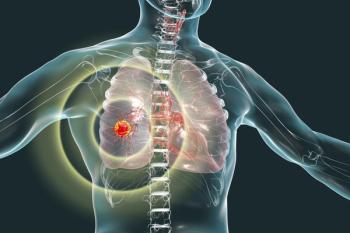
While most thyroid cancers are slow-growing, FTC is unique because it is "angioinvasive," meaning it has a tendency to invade blood vessels. Unlike other types that typically spread through the lymph nodes, FTC can occasionally travel through the bloodstream to distant sites, such as the lungs or bones. However, when caught early, the vast majority of cases remain confined to the neck and are highly curable.
Diagnosing follicular thyroid cancer is often a multi-step process. Many patients first notice a firm, painless lump in the neck, or a nodule is discovered incidentally during imaging for an unrelated issue.
The primary challenge in diagnosing FTC is that, under a microscope, follicular cancer cells look remarkably similar to benign (non-cancerous) follicular adenomas. A standard Fine Needle Aspiration (FNA) biopsy — where a small needle removes a sample of cells — is often unable to distinguish between the two. In these cases, the pathology report may be labeled as "follicular neoplasm" or "suspicious."
To reach a definitive diagnosis, surgeons usually must perform a diagnostic lobectomy to remove the affected side of the thyroid. Pathologists then examine the entire outer edge (the capsule) of the nodule. If the cells have broken through the capsule or entered the blood vessels, a diagnosis of follicular thyroid cancer is confirmed. In recent years, molecular testing has also become a vital tool, where doctors analyze the DNA of the biopsy sample for specific genetic mutations, such as RAS, to help predict the likelihood of malignancy.
Treatment for FTC is highly personalized, based on whether the tumor is "minimally invasive" or "widely invasive."
Understanding potential side effects can reduce anxiety and help you prepare for recovery.
The prognosis for follicular thyroid cancer is generally excellent, with a 10-year survival rate exceeding 90% for most patients. Your long-term care will involve "surveillance," which typically includes periodic blood tests to monitor Thyroglobulin (Tg). Thyroglobulin is a protein made only by thyroid cells; if your thyroid has been removed, your Tg levels should be near zero. A rising Tg level can act as an early warning system for your doctor.
Education is your best tool for navigating this journey. By understanding the pathology and treatment logic, you can work as a partner with your oncologist to ensure the best possible outcome.
Editor's note: This article is for informational purposes only and is not a substitute for professional medical advice, as your own experience will be unique. Use this article to guide discussions with your oncologist. Content was generated with AI, reviewed by a human editor, but not independently verified by a medical professional.
For more news on cancer updates, research and education,