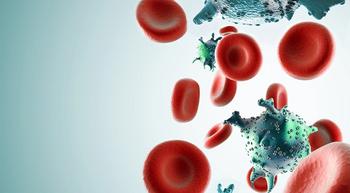
Epkinly plus R-CHOP lowered the risk of disease progression or death by 51% versus R-CHOP alone in patients with newly diagnosed diffuse large B-cell lymphoma.
Kim Johnson shares her experience losing her sister to cancer, offering guidance for those grieving and for the people supporting them.
Amid the grief that I have and continue to deal with due to my sister’s death from cancer, I have been blessed with phenomenal support and people who wanted to do something to assist me. Aside from the typical “I’m sorry,” a lot of what was offered to me were texts and voicemails noting, “please let me know if you need anything” or “can I do anything for you?” And while these questions were sincere, I found them difficult to answer. Since my sister's death, there have been a multitude of endless things that I have had to choose, choices that I have had to make, and plans to coordinate. It was overwhelming to say the least.
Now, being a few months removed from her immediate death, I've had just a little bit of time to reflect. If those questions were phrased differently, they might be more helpful to those grieving. That is not to say that the question is wrong. I am acutely aware that those who offer to do anything for me do so, and continue to do so, out of the kindness of their hearts. They are doing so because they care about me. They want to help me through my time of grief. So before writing this article, I sat with these thoughts. I thought about sharing my story to help those who might also be assisting others to go through grief. Not to say that I'm ungrateful for the help that has been offered, because that could not be further from the truth. I am immensely grateful for those who have offered to bring a meal, sent gift cards so I could order food to the house, and for those who just came to keep me company, so I wasn't alone while in the fog of her death.
For me, choices are overwhelming. And in the immediacy of my sister’s death, I found myself paralyzed. Unable to make choices, simply not sure what to do. While I was asked, "What do you need?” I had no idea what I needed. And honestly, I'm still not sure what I need. On an obvious level and an impractical one, I need my sister not to be gone. I need for her diagnosis never to have happened, and I need for the reality of her death to be anything but the truth. Asking for that is futile and moot, given that this is unfortunately not a reality. On every other level, I didn't know what I needed. Practically speaking, what I needed was not to cook dinner every night and not to have to go to the grocery store. To take some time to be away from society, so that strangers didn't ask if I was okay due to my tears, even though I was visibly not okay. Understandably, though, what else do you do but ask someone who appears not okay? The question is, "Are you okay?"
For me, the things that helped most were the ones done for me without me having to ask. And I only hope that those going through grief, as I am, have the same immensely amazing people that I am so lucky to have in my life. I recognize the privilege in that because I know, having worked in oncology for nearly a decade and having walked so many others through their own grief, that that unfortunately is not true. For me, having people show up at my house and clean my kitchen, cook dinner, and sit with me while I cried - it truly meant everything. People who love me showed up when I said I did not want them, because they knew I needed not to be alone. They did the things for me that I could not do for myself. They brought snacks so I could eat when I was hungry, or sent gift cards or monetary funds, with notes attached saying “please buy yourself dinner tonight so you don’t have to cook. I’m thinking of you.” It alleviated one seemingly insignificant thing in a day that felt like just another boulder weighing me down.
In the first few days after her death, everything felt so surreal. The moment that I had tried so hard to prepare myself to face for nearly 11 years arrived, and I was not ready. How lucky was I to have so many people in my life who showed up for me? I called one of my closest friends, Julie, and I noted that my house was in disarray because, as someone who is typically clean and keeps a home open to everyone, I just wasn't in a place to keep it. My brother was out of town attending a funeral for a cousin, and I was alone and overwhelmed. Julie came over, cleaned my kitchen, and stayed for hours. My other friend, Poppy, joined her a few hours later, and she, too, cleaned my home, helped make dinner that night, and stayed until the wee hours of the morning, knowing I needed company.
To be clear, people are not mind readers. And as hard as it was for me to ask for help, and in fact, I don’t know that I did in those first few days, I want to be crystal clear when I say it is okay to ask for help. If you are capable while in the throes of grief, please ask for that help. Although you may feel like you are, you are not a burden. You are enduring something so crushing, heartbreaking, and tremendously challenging. As human beings, we are not meant to endure anything alone. Let alone the loss of someone we love. If there’s one thing you ask for amid your grief, let it be asking for help.
And for those of you on the other side, watching someone go through grief, I hope that these suggestions help you help them. Undoubtedly, if you want to do anything for someone who is going through grief, you already have a giver's heart. It is kind and compassionate of you to make any attempt to support them. Just pause for a moment and think about how you can offer something without adding an extra burden. Check in with them, let them know you love and care about them, and that you will bring them dinner. Show up for them, without unintentionally placing the burden of more choices on someone who is grieving. I know that you mean well, and I assure you that what you do, no matter how small you feel the effort you think that you are putting in, will be appreciated and mean so much to the one grieving.
This piece reflects the author’s personal experience and perspective. For medical advice, please consult your health care provider.
For more news on cancer updates, research and education,