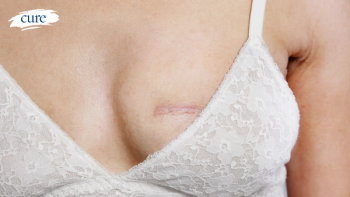
Three doctors dismissed Christine Kushner’s breast changes at 37. Trusting her gut and pushing for a mammogram helped save her life.
Learn about male breast cancer, including common symptoms, diagnostic tests and how hormone therapy or surgery is used to treat this rare disease.
Male breast cancer is a rare disease that forms in the breast tissue of men. While breast cancer is often associated with women, men also have breast cells and tissue that can develop into cancer. It most commonly affects older men, though it can occur at any age.
Because men have very little breast tissue, it is often easier for patients or clinicians to feel small lumps. However, because many men do not realize they can develop the disease, diagnosis is sometimes delayed until the cancer has reached a more advanced stage. Most cases are invasive ductal carcinoma, which begins in the ducts that carry milk to the nipple.
“Men have breast tissue too — it’s nothing to be embarrassed about. But because breast cancer is seen as a ‘women’s disease,’ men often delay getting checked,” breast cancer survivor
The diagnostic process typically begins when a patient or doctor identifies a lump, usually located directly under or near the nipple and areola.
Treatment plans are highly individualized and depend on the stage of the cancer and the results of biomarker testing.
Treatments are designed to eliminate cancer, but they can affect healthy cells, leading to various side effects.
A diagnosis of male breast cancer can feel overwhelming, but medical advancements have led to highly effective treatments and improved outcomes. Open communication with an oncology team is the most important tool for navigating this journey.
Patients are encouraged to ask their doctors about the specific subtype of their cancer, the goals of each proposed treatment, and whether they should consider genetic testing for BRCA1 or BRCA2 gene mutations, which can impact family members.
Editor's note: This article is for informational purposes only and is not a substitute for professional medical advice, as your own experience will be unique. Use this article to guide discussions with your oncologist. Content was generated with AI, reviewed by a human editor, but not independently verified by a medical professional.
For more news on cancer updates, research and education,
Stay up to date on cancer updates, research and education
Subscribe