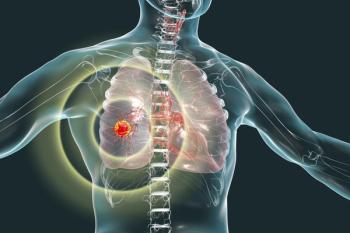
An estimated 70% of patients with stage 3 lung cancer do not see their tumors respond to standard treatment. An expert explains why, and what a new approach aims to change.
Mariska Hargitay discusses her father's myeloma, hope from research and the importance of community and caregivers for patients.
Actor and advocate Mariska Hargitay has partnered with Bristol Myers Squibb to launch "Investigating Myeloma," a disease awareness campaign honoring the 20th anniversary of her father Mickey Hargitay's death from multiple myeloma.
The campaign spotlights the critical unmet needs in myeloma and highlights BMS's CELMoD research — an investigational approach that engages the cell's natural protein removal system to stimulate the immune system and enhance the killing of myeloma cancer cells — as a source of renewed hope for patients and their families.
Hargitay spoke with CURE about her father's battle, why she is speaking out now and what she wants patients to know today.
Hargitay: I'm just very heartened by this incredible campaign. The research has been very exciting, and again, heartening for me to learn about the CELMoD research and what they've been doing for all these years. It just provides so much hope that wasn't there before, so I'm grateful and very excited by it, and just want to amplify the messaging because of that.
It's a very different landscape today than it was when my father was diagnosed and passed 20 years ago. That's what's so exciting now — there's all this incredible research. What I want patients to know is that there's hope, and what I want to remind them is that even though cancer is so scary, and blood cancers are frightening, it is the time not to retreat and to isolate, but to stay in community and lean on our loved ones. Being present with somebody going through this is the most important thing, and that's what everyone wants. Nobody wants to feel alone, so the reminder is the power of community, and the new message is that there is indeed hope.
I also just want to shout out to all the caregivers, because I don't know that they know how powerful they are, and how much influence they have. That loving, supportive, present face — how healing that is for people going through this. I just want to thank them, remind them how powerful they are, and how grateful we are for them.
I've been thinking about talking about multiple myeloma, especially because over these past 20 years I've learned much more about it. It was something that was indeed so shocking, and something that I knew nothing about. I think my whole family was just processing, and it took quite a long time to do that. Obviously I've been focusing on domestic violence and sexual assault, but now I think it is so important to talk about all things that make us feel vulnerable. When Bristol Myers Squibb approached me about this campaign, I jumped at it, because it has been so close to my heart. I also learned the statistics — I didn't realize that 36,000 people are diagnosed each year, that it was the second most common blood cancer. That affects a lot of people, and any time we can amplify the message that you are not alone, that a lot of people have this, and that the landscape is indeed changing and there is new research being developed every single day — we're getting closer and closer to a cure.
There's something quite profound about awareness of our own feelings and our own bodies. It can be hard and quite challenging to be a caregiver, and the line becomes so blurred between the self and the person that you love. But it's like an airplane — you have to put your own oxygen mask on first, because only in taking care of yourself can you truly be there for another person.
As I get older, I'm learning I can still show up, but I also have to show up for myself. And sometimes those are just little micro moments — going, "This is too much right now. I need a second." Taking three to five minutes to breathe, stopping for a moment, listening to a favorite song, meditating, having something to eat, drinking a glass of water. These little things we do for ourselves send the message that I matter. Mattering is everything — to the caregiver and the person being cared for.
I would want them to know that the times are changing, that the landscape of multiple myeloma is changing, and so much research is being done. But the most important thing is to stay in community, stay hopeful, be with your family, don't retreat. You are not a burden. You are loved, and we will get through this.
For more news on cancer updates, research and education,