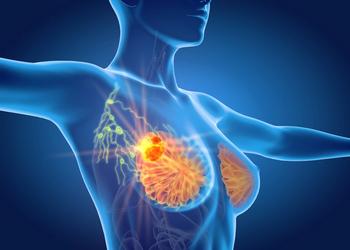
Three doctors dismissed Christine Kushner’s breast changes at 37. Trusting her gut and pushing for a mammogram helped save her life.
Kaitlyn Palsson, RN, of Utah Cancer Specialists, draws on her childhood Type 1 diabetes diagnosis and family history of cancer to bring deep empathy and purpose to every patient interaction.
Kaitlyn Palsson's path to oncology nursing began when she was 9 years old and learned to navigate life with Type 1 diabetes. Managing injections, alarms and uncertainty taught her early what patients feel when their bodies become medical battlegrounds, and it shaped the way she shows up: steady, kind and deeply attuned to fear and hope alike.
As a child, she admired her grandfather, a physician who founded a nonprofit to help caregivers lead with compassion and hope. That legacy lived on through her aunt, who opened a cancer rehabilitation clinic and spends countless hours volunteering with the American Cancer Society. Working alongside her aunt, Palsson fell in love with supporting cancer patients and often says, "You have to be someone special to have cancer." She sees beyond diagnoses to the people — parents, siblings, friends — who carry grit, humor and love into every appointment.
Cancer is also part of Palsson's family story. Her grandmother is a two-time breast cancer survivor, and other loved ones — two great-grandmothers and a great-aunt — were lost to breast cancer. Her grandfather faced prostate cancer as well. These experiences deepen her resolve: every chart has a face; every infusion, a family.
When Palsson became a nurse, oncology felt like home. Her own lived experience helps her translate fear into trust. Once, noticing a patient tense at the mention of an injection, she smiled and said, "Don't you worry — I've been giving myself shots since I was 9 years old. I'm really good at shots." A simple truth, offered with warmth, turned a procedure into a partnership.
Palsson's influence also reaches beyond the clinic. Her story has been shared with hundreds of women who are survivors of childhood trauma, lighting a path toward aspiration and intentional living. It shows how a young girl's diagnosis became a compass for meaningful work, and how turning hardship into purpose can awaken courage, dignity and hope.
Palsson doesn't just deliver chemotherapy — she delivers courage. In her care, fear turns into trust and pain into dignity. Every infusion becomes a promise that hope and compassion can change a life. And at the heart of her calling is family: the grandfather who modeled compassion, the aunt who opened doors of service, and the loved ones whose battles with cancer shaped her resolve. Because of nurses like Palsson, the hardest days are met with steady hands and a braver heart — proof that expertise wrapped in empathy can lift a patient, a family and an entire community.
For more news on cancer updates, research and education,