
Opinion|Videos|August 7, 2024
Starting CML Treatment: Collaborative Choices for Better Outcomes
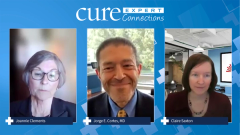
Focusing on the initiation of treatment for newly diagnosed patients with CML, Jorge E. Cortes, MD, details important factors to consider when starting treatment and Claire Saxton discusses strategies that optimize communication when considering treatment options.
Advertisement
Episodes in this series
This program was made possible with support from Novartis Pharmaceuticals.
Video content above is prompted by the following questions:
- What are some of the most important considerations when starting treatment for a newly diagnosed patient with CML? How do age, comorbidities, and other considerations factor into the treatment plan?
- Describe your best practices in helping newly diagnosed patients with CML better understand their treatment plan given the complexities involved.
- In your experience, what strategies promote transparent communication around treatment considerations?
- How can patients feel empowered to collaborate with their healthcare team to make an informed decision on the optimal initial treatment?
- How can patients feel empowered to collaborate with their healthcare team to make an informed decision on the optimal initial treatment?
Advertisement
Related to this article

Up to 40% of patients with classic hairy cell leukemia relapse within 10 to 15 years. An NIH researcher explains how adding Rituxan up front may help.

A new trial will test whether a set course of Brukinsa plus sonrotoclax, which target two pathways that drive hairy cell leukemia, can offer an alternative to chemotherapy.

An experimental treatment has kept one patient with heavily pretreated hairy cell leukemia free of detectable disease for more than two years, raising questions about whether CAR T-cell therapy could offer a path toward a cure.
Advertisement
Advertisement
Trending on CURE
1
What Is a Whipple Procedure? Pancreatic Cancer Surgery Explained
2
Datroway Slows Brain Metastases in Triple-Negative Breast Cancer
3
Weight Loss With Pancreatic Cancer: Why It Happens and What Helps
4
Glioblastoma Patients Can Request Genomic Testing on Their Tumor Tissue
5