An estimated 70% of patients with stage 3 lung cancer do not see their tumors respond to standard treatment. An expert explains why, and what a new approach aims to change.

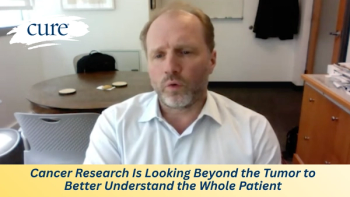
Dr. Ramy Sedhom highlights screening and care pathways that improve outcomes and strengthen psychosocial support for patients with cancer.
Dr. Ramy Sedhom spoke with CURE about the prevalence of psychological distress in cancer care and strategies to better identify and address these often-overlooked needs.
Sedhom is a medical oncologist and palliative care specialist at Penn Medicine, where he serves in multiple leadership roles including co-lead of Geriatric Oncology for the Penn Cancer Service Line and clinical director of Medical Oncology at Penn Medicine Princeton Health. He also serves as associate director of the Penn Center for Cancer Care Innovation, co-lead of Psychosocial Oncology Services at Princeton Health, division chief of the Palliative Care Division in Medical Oncology, and clinical assistant professor of medicine (Hematology-Oncology).
Sedhom: Cancer is hard for anyone, and what we've noticed is that there is a lot of mental distress that comes with any cancer diagnosis. This is regardless of age. This is regardless of prior experience or the continuum or trajectory of disease. Nationally, it is well known that about 50% of all patients who are diagnosed with cancer will have some sort of mental distress. This can look like anxiety or depression. It can look like distress with coping, and all of these things can really impact all aspects of the patient and caregiver experience.
I think the keyword here is "go unrecognized." Mental health symptoms can often look very different for people, and unfortunately, they may not always capture the attention of the physician or the clinician that is involved in the care of the patient. For example, we may see a patient who is struggling a lot with physical symptoms from a new therapy. Oftentimes, those symptoms are organic, meaning they come either from the drug or the way that the drug is broken down in the patient, but they can often be potentiated when there's an underlying stressor.
Sometimes those stressors could be things like anxiety, meaning worrying about the future. Oftentimes they can be existential, like, "Why did this happen to me?" or "What does my future look like?" especially in the era of novel therapies where there is a lot of prognostic uncertainty.
Many times, these stressors can come from the home environment. I have many patients who live, for example, in the sandwich generation; they're young, they have their own children, and they're helping with their parents who may have their own ailments. It's just the total weight of it all that bears so much on them and can sometimes present as physical symptoms, such as fatigue, forgetfulness, and the inability to manage, for example, some of the toxicities that come from therapy.
All of these things are important because they ultimately not only impact patient outcomes but the patient experience.
I think there are ways to try to better unveil these hidden toxicities. A lot of times they can come from validated surveys. Cancer centers are not new to questionnaires that we often give out to patients, but it's really important, I think, to roll these out systematically and to not just do a screening, but to make sure that when the distress is recognized, there's an ideal workflow to get patients to the right level of support. That's something that we've really emphasized in our program at Penn Medicine Princeton Health.
We have universal distress screening, and they're given at frequent time intervals. Every three months, our patients get a distress screen, whether their cancer is curable and whether they're younger or older patients. These distress screens get flagged to both the clinician and the social worker and psychosocial health team to make sure that there are appropriate care pathways to address them when they come up.
We also have universal adoption of patient-reported outcomes for patients who are on therapy. This is another opportunity to investigate how one is doing. Patient-reported outcomes not only look at physical symptoms but also things like depression and anxiety. It's often open-ended, meaning we have patients who sometimes write, "I am doing okay, but my caregiver is not," and that's allowed us to also extend appropriate services to those who are accompanying their loved ones.
Going back to national statistics, 50% of patients who are diagnosed with cancer experience some sort of mental health symptom. The biggest problem, aside from this being unrecognized, is that fewer than 20% of patients nationally have access to mental health support. This is due to a lot of reasons. Many of them are policy or reimbursement issues, but a real, fixable one is just how we are geographically located.
So, at our institution, thanks to a local donor who had his own unfortunate experience helping his mom live with cancer and seeing the mental health impact that can have on one and their extended family, we were able to kick-start a psychosocial oncology program at our institution. What I've noticed is that having therapists embedded in the clinic, really as a shared-care model, improves access, and I see this in real time in the clinic.
To give just a very pertinent example that honestly happens every day, I may be sitting with a patient who, let's say, is 40 years old, with a new diagnosis of breast cancer, has two young kids at home, and is very worried about what her future will look like because she is young and dependent on her health insurance and the income that comes with it. She has to manage balancing being a mom, working, and tolerating her cancer therapy. As you might imagine, many of our visits are not just a logical exchange, but an emotional connection.
While I, as an oncologist, try to play therapist, there is a lot of emotion and worry that often comes with a cancer diagnosis, and while I lean into that responsibility, I am not as equipped, for example, as a psychologist or a licensed clinical social worker.
What is really nice about an embedded program is that if I recognize my patient is in distress, instead of telling her, "Hey, I think you'd benefit from support; do you have a counselor?" — which most patients would not have access to in the community, again, due to cost, convenience, time, and toxicity — I can reach out to one of our many therapists who work in the clinic with us and say, "Hey, I know that you're really struggling today, and thank you for sharing how this is really impacting you. I'd like to call in my colleague to come and sit and chat with you to understand what's going on and how we can better help."
What’s nice about that, what we call a warm handoff, is that when we're embedded into the cancer care team, it not only signals that this is an important routine part of care, but it also allows that early touch point to happen in real time when the patient is feeling distress. This allows for a therapeutic connection.
What we've noticed is that adherence rates in our clinic are much higher than the national average, meaning those who are warmly welcomed to a psychologist are much more likely to engage in and complete care.
Transcript edited for clarity an conciseness
For more news on cancer updates, research and education,