Challenge yourself after cancer by building healthier habits, strengthening relationships, managing stress and embracing new experiences for a healthier life.
A decade after my double mastectomy, I went to the cardiologist worried about my heart and left having shared my breast cancer story with a stranger.
Sometimes cancer follows us into places where we least expect to find it. For me, it happened this week in a cardiologist's office, where I went looking for answers about my heart and ended up sharing a piece of my breast cancer story with a stranger who understood more than either of us expected.
Recently, I had been having some problems with heart palpitations and premature ventricular contractions (PVCs), so my cardiologist wanted me to wear a 24-hour heart monitor for 30 days. The idea was to catch whatever my heart was doing when I wasn't sitting in the doctor's office. After wearing that little device for a month, it was finally time to return for the results, and I expected to hear what the monitor had discovered.
Instead, when I arrived, I was told I would also need an electrocardiogram (EKG) and an echocardiogram. My heart immediately seemed to beat a little faster for an entirely different reason. Had they found something serious? Was there something wrong that I didn't know about? My family has a history of heart problems. Although I tried to keep my face calm and my voice steady, inside I was already imagining all sorts of frightening possibilities.
The cardiologist I was seeing was new to me. We had only lived in our new city for about four months, so this office didn't know me or my history. They didn't know about my breast cancer diagnosis, my double mastectomy or the complicated relationship I have developed with the body that cancer left behind.
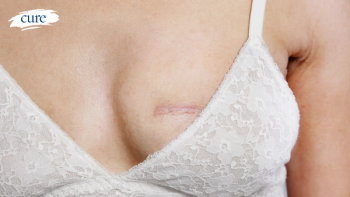
When the nurse came in to perform my EKG, she explained that I would need to lift my shirt so she could attach the electrodes to my chest. Before doing so, I felt compelled to warn her. "I don't want to freak you out," I said, "but I have no breasts." She paused for just a moment, smiled kindly, and said, "No worries." Then she went about her job.
I wish I could say I felt completely comfortable after that, but I didn't. I did my best to act as though it were no big deal, but embarrassment has a funny way of creeping into even the most ordinary moments. I have been without breasts for more than a decade, yet there are still times when having to explain it to someone makes me feel vulnerable all over again.
The nurse attached the electrodes, completed the EKG and removed the sticky patches. Then she told me the doctor would be in soon, and I was left alone with my thoughts. I sat there, wondering what the heart monitor had revealed and what the doctor would tell me. I tried to remind myself that an EKG and an echocardiogram don't necessarily mean something is wrong; sometimes doctors simply need more information. Still, when you have already faced a life-threatening illness, waiting for medical answers can stir up memories you'd rather leave buried.
Before the doctor came in, another nurse appeared and asked me to come with her for the echocardiogram. My husband wanted to come along, but she assured him we'd be right back. She explained that an echocardiogram was essentially an ultrasound of my heart. It would allow them to look at how my heart was functioning and check for possible problems.
She handed me a paper gown and told me to remove everything except my pants. Once again, I found myself apologizing. "I need to tell you something," I said. "I don't have breasts." This time, instead of simply acknowledging it and moving on, she listened.
I briefly told her my breast cancer story, something I've become surprisingly good at doing after more than a decade of survivorship. There is a shortened version I can tell in just a few sentences because I've had so much practice. Cancer. Double mastectomy. No reconstruction.
Then she told me something that changed the entire atmosphere in that little examination room. Her sister had been diagnosed with breast cancer the previous year, and her sister had also chosen not to have reconstruction. Suddenly, I wasn't the only woman in the room carrying a story about breast cancer.
We began talking about what it is like to live without breasts, about the things people don't always understand after treatment ends and about the challenges that come with prostheses. She told me her sister hated wearing hers, and I laughed softly and admitted, "So do I." There is something strangely comforting about discovering that another woman understands a part of your experience without needing a long explanation.
For years, I've worn prostheses when I leave the house. At home, I usually don't. Home is where I can simply be me. I don't have to worry about whether my clothing hangs differently or whether someone might notice that I am breastless, and I don't have to wear something uncomfortable simply because society has decided that women are supposed to have breasts.
But stepping outside my front door is different. I put them on, and sometimes I wonder why. Is it embarrassment? Is it habit? Is it because I don't want other people to feel uncomfortable? Maybe there is also a strange sense of duty involved, as though I am responsible for making my body look the way everyone expects a woman's body to look.
And then there is the discomfort. This summer has made that especially difficult. With temperatures climbing into the upper 90s and humidity hanging heavy in the air, there have been many days when I've wanted nothing more than to leave those prostheses at home. There have been days when I've thought, "I just want to go outside without all of this," but I haven't had the courage.
The irony is that I survived cancer, endured surgeries and treatments, faced the possibility of dying and came through the other side. Yet sometimes I still feel embarrassed about the very evidence that I survived. I don't think I'm alone in that.
We talk so much about surviving cancer, and rightly so. We celebrate anniversaries, ring bells, receive certificates and tell people we are cancer-free. But survivorship can be complicated. There are physical scars, emotional scars, changes in the way we see ourselves and little daily reminders that life will never be exactly as it was before cancer.
There are also unexpected moments when our stories connect us to other people. That happened to me in that cardiology office. I walked in worried about my heart and walked out having helped another woman who wasn't even there.
The nurse asked me about the alternative I had found to traditional silicone prostheses. I told her about the lighter-weight prostheses I use that are incorporated into a tank-style garment. They are much more comfortable for me, and they were considerably less expensive than the heavy silicone prostheses covered by my insurance.
She wanted the ordering information so she could pass it along to her sister, and I was happy to give it to her. It felt good to know that perhaps something I had learned through my own difficult experience might make another woman's journey just a little easier.
As I left that room, I couldn't help but think about how strange life can be. I had gone to the cardiologist because I was worried something might be wrong with my heart. Instead, I found myself talking about a part of my life I sometimes wish I could forget.
It seems to happen everywhere I go lately. Somehow, my breast cancer story finds its way into conversations with strangers, acquaintances, nurses, friends and women who know someone who has been diagnosed. It is sad when I realize just how many women have been touched by this disease.
I wish cancer had never entered my life. I wish I had never had to learn the vocabulary of mastectomy, reconstruction, prostheses, lymphedema, survivorship and recurrence. I wish I could have grown older without ever having to think about what it means to look in a mirror and see a body permanently changed by disease; but wishing doesn't change the past, gratitude does.
So, I choose to be grateful that I'm still here. I'm grateful for another morning, another summer, another trip to the cardiologist, another conversation, another opportunity to laugh, write, love, pray and share what I've learned.
I've also learned that it is OK to struggle with being breastless. I don't have to pretend that I love every part of what cancer left behind. I can be grateful to be alive and still mourn the parts of myself that I lost. Those two feelings can exist together, and acknowledging both doesn't make me less grateful or less strong.
Maybe that's one of the most important lessons of survivorship: We don't have to be grateful for cancer to be grateful for life. We can hate what it took from us while cherishing every single day it failed to take away. And perhaps there is another lesson in that little cardiology office. Sometimes the scars we wish we could hide become bridges to someone else.
I walked into that room feeling embarrassed about what cancer had taken from me, but I walked out realizing that the very thing I wanted to apologize for had allowed me to help another woman. Cancer changed my body, but it did not take away my ability to encourage someone else.
Maybe that's what I will carry with me the next time I look in the mirror and see what is missing. I will try to remember that my body isn't merely a reminder of what cancer stole from me; it is evidence of what I survived, and perhaps the story I am willing to tell will help another woman realize that she, too, can survive what she never thought she could endure.
Because sometimes surviving isn't about getting back the woman we were before cancer. Sometimes it is about learning to love, accept and even use the woman we became afterward — and discovering that the scars we once wanted to hide may become the very places where someone else finds hope.
This piece reflects the author's personal experience or perspective. For medical advice, please consult your healthcare provider.
For more news on cancer updates, research and education,