Now Playing
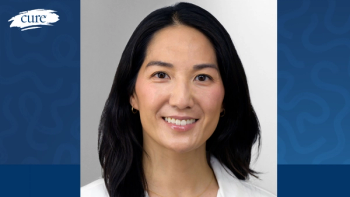
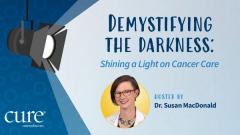
Dr. Susan MacDonald, a urologist who has been diagnosed with stage 4 breast cancer, launches a new vlog series for CURE, “Demystifying the Darkness.”
In poignant and informative vlog for CURE — the first installment in her new “Demystifying the Darkness” series — Dr. Susan MacDonald provides a grounding perspective on receiving a cancer diagnosis.
A urologist who is living with stage 4 breast cancer, she speaks with the unique authority of both a provider and a patient. Her primary advice to those who have just received the call no one wants to get is to avoid immediate panic. She explains that the word cancer is often treated as a singular, terrifying sentence, but in reality, it is a broad term that covers a vast spectrum of medical situations.
MacDonald points out that cancers are not created equal. Some cases are minor enough to be treated with simple laser procedures, surgical excision or even topical chemotherapy creams. Other diagnoses might require a more intensive combination of medication and surgery, yet these often come with very high cure rates. While she acknowledges that some aggressive forms of the disease lead to difficult outcomes, she emphasizes that the word cancer itself only confirms the presence of abnormal cells. It does not immediately define the context of a patient's life, the level of pain they will endure or whether they will live or die.
The central message of her talk is that the initial diagnosis is often devoid of the specific details needed to understand a prognosis. She urges patients to take a moment to breathe and wait for the full clinical picture to form. This comprehensive understanding only comes once a doctor can analyze the specific type of cells involved, the grade of the malignancy and the stage of the disease. Until those facts are gathered, the word cancer lacks the context necessary to dictate a person's future.
By relying on the expertise of medical professionals and focusing on the specific data rather than the general label, patients can better navigate the initial shock. MacDonald’s reflection serves as a reminder that while the news is life-altering, the specific characteristics of the disease are what truly determine what the diagnosis means for the individual. Her dual role as a surgeon and a patient allows her to bridge the gap between clinical reality and the intense emotional response that follows a diagnosis.
“Demystifying the Darkness” is a new vlog series for CURE Today hosted by MacDonald, now in its first season, featuring the urologist, who has stage 4 breast cancer, educating viewers about cancer basics and answering frequently asked questions.
MacDonald is equal parts ferocity and positivity. She devoted her entire young life to the pursuit of a medical career in reconstructive urology, sexual medicine and surgical education. Then, at age of 42, when all of her professional dreams began to come to fruition, every person's nightmare happened: She was diagnosed with metastatic breast cancer despite no family history, and found she had a BRCA2 mutation.
Like all patients with cancer, she has had to slow down and take stock of her life. After realigning her priorities, she has embarked on a career helping patients in a new way using her medical knowledge to bridge the communication gap between doctors and patients.
MacDonald graduated medical school from University of Florida, completed a six-year urology residency at Montefiore Medical Center in the Bronx, New York, followed by a fellowship in genitourinary reconstructive surgery at Wake Forest and then practiced for a decade at Penn State, ultimately rising to associate professor and program director prior to her diagnosis. Now she focuses her time on her health, her family, research to advanced patient career and creating content that arms patients with the knowledge to participate in the own health care and navigate the complexities of the health care system.
This piece reflects the author’s personal experience and perspective. For medical advice, please consult your health care provider.
For more news on cancer updates, research and education,