

Looking for the right virtual care can be important for patients with cancer, but now in the midst of the COVID-19 Pandemic, it’s essential. Here is one expert's advice for patients new to telemedicine.
Looking for the right virtual care can be important for patients with cancer, but now in the midst of the COVID-19 Pandemic, it’s essential. Here is one expert's advice for patients new to telemedicine.

“In 16 seconds, we can really bring our consciousness to the present moment.”

Patients with chronic lymphocytic leukemia are at risk for the worst of COVID-19 symptoms, but going on the cancer journey has prepared them for the pandemic.

Cancer caregivers can already feel isolated and lonely, and with the COVID-19 Pandemic forcing people to stay home it can get worse. But good communication can help create a sense of community and allow caregivers to feel less lonely.
Want to know how the COVID-19 Pandemic is impacting cancer care and what it means for patients with cancer? Let the experts from CURE's webinar fill you in!

Social distancing measures are keeping people apart, but that hasn't stopped some patients with CLL from finding a new sense of community.

As patients begin to look at what’s to come when lockdown measures in place are relaxed a new logistical puzzle will pop for some.

The COVID-19 Pandemic has changed immediate treatment for patients with chronic lymphocytic leukemia, but it is also impacting the clinical trials looking to improve the future treatment for these patients.

There are advantages and disadvantages to delaying elective reconstructive breast surgery, according to one expert.
“I’m not going to give up on that just because of this pandemic. Health is most important, as it should be for us cancer survivors.”

Patients with breast cancer have come to terms that the risks of having reconstructive surgery at this time are too great, according to one expert.

“Only you have the power to make your life better,” says a myeloma survivor on living for the moment after a cancer diagnosis.

Sleep is important to everyone, especially for patients with cancer as they recover from treatment. But as many people are currently learning, rest is sometimes hard to come by while navigating the global COVID-19 pandemic.
Despite the impact that COVID-19 is having on cancer treatment schedules, one expert stresses the importance of staying the course not just for an individual’s benefit, but for the health of others.

A three-year lung cancer survivor discusses the shock of her diagnosis, and the positivity that ensued in her everyday life.
Looking at new data from the phase 3 PEARL trial, Dr. Melissa K. Accordino discusses how the use of CDK4/6 inhibitors could help patients with HR-positive/HER2-negative metastatic breast cancer move away from chemotherapy.
Patients with blood cancers are facing unprecedented challenges to their treatment journeys as the COVID-19 pandemic continues to disrupt the cancer landscape. Which is why the Leukemia and Lymphoma Society is looking to offer its own lifeline to patients.

“I thought, you know what I have control right now: if I'm going to laugh, if I'm going to enjoy my family, or if I'm going to hide in a corner and cry all day. I'm not going to do that. I'm not going to let cancer do that to me.”

Dealing with cancer can be a stressful enough experience without having to navigate a worldwide pandemic, as many are doing due to COVID-19. But according to Rob Paulsen, voice actor and throat cancer survivor, the key to making it through each day may be in finding a reason to smile.

“I just want people to know that when they say you have cancer, they are not saying you have a death sentence. You can still live and you can live well.”

The COVID-19 pandemic has changed how people receive health care services. For Donna Wiegle, director of the Mill Pond Health Center in Maine, and cervical cancer survivor and patient with ovarian cancer, the pandemic hasn’t yet changed how her island’s health center provides residents with routine care.

MPN Hero Dr. Irum Khan discusses how education events for patients with cancer are helpful to both the patient and the clinician.
The adolescent and young adult cancer community is one that faces life-changing challenges at an age where this type of challenge is not expected, and it is now compounded by the COVID-19 pandemic. But there is a lifeline for AYA patients to not only cope, but thrive.
Expert Dr. Sara Hurvitz discusses why cancer survivors should discuss their risk factors during the COVID-19 pandemic with their healthcare providers.

In the face of the COVID-19 pandemic patients with cancer who are considered to have weakened immune systems need to have a special emphasis placed on their care.
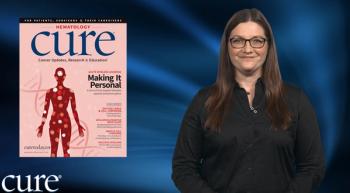
Here are the latest highlights from the first CURE Hematology Special Edition issue for 2020.

Get a sneak peek at what’s inside our Winter 2020 issue of Heal Magazine.

Here are the top five CURE® stories for February 2020.

Utilizing the data of the CheckMate 9ER trial, researchers believe that combination therapies in the treatment of patients with renal cell carcinoma are the future of the landscape.
Here’s a look at what’s inside our 2020 Winter issue.