
Adolescent and Young Adult Cancer Awareness Week sheds light on the financial hardships young cancer survivors face, including debt and limited assistance.
Adolescent and Young Adult Cancer Awareness Week sheds light on the financial hardships young cancer survivors face, including debt and limited assistance.
CURE spoke with Dr. William C. Huang about what kind of team may be required to treat a patient with metastatic kidney cancer.
Dr. Regina Hampton discusses key factors contributing to this disparity, and how healthcare systems can address these challenges.
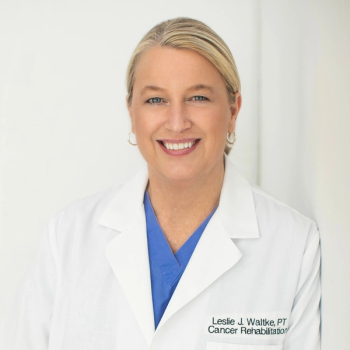
CURE spoke with Leslie Waltke about the importance of physical therapy during a cancer journey.
Treatment with Rina-S showed antitumor activity in heavily pretreated patients with advanced ovarian cancer, according to the phase 2 RAINFOL-01 study.
Sid Sadler discusses kidney cancer awareness, patient advocacy and the need for specialized care to improve access to treatments and clinical trials.
Dr. Emre Yekedüz discusses his top 3 key takeaways from attending the 2025 ASCO Genitourinary (GU) Cancers Symposium.
Registered nurse Patricia Jakel emphasizes the importance of educating patients on evolving breast cancer research and the need for routine screenings.
Dr. Debu Tripathy highlights the importance of staying informed on breast cancer advancements and how this empowers patients to make informed decisions.
In HER2-positive early breast cancer, Kadcyla shows sustained improvement in both invasive disease-free survival and overall survival versus Herceptin.
Antibody-drug conjugates have had a tremendous impact on breast cancer care and treatment, according to Dr. Charles E. Geyer.
Dr. Emre Yekedüz highlighted strategies that may improve patients' quality of life and mitigate treatment-related side effects in renal cell carcinoma.
Dr. Debu Tripathy discusses recent research on the use of circulating tumor DNA in metastatic breast cancer care.
Dr. Yufei Liu discusses how updates to precision radiation therapy are reshaping colorectal cancer care.
Dr. Joseph Mikhael discusses the overlooked symptoms of multiple myeloma in honor of Myeloma Awareness Month.
Dr. Deepa Jagadeesh discusses Ordspono's potential FDA approval for relapsed/refractory follicular lymphoma, highlighting its manageable toxicity and low CRS rate.
Dr. Kevin Kalinsky discusses the role of targeted therapy and clinical decision-making in managing estrogen-driven, HER2-negative breast cancer.

Dr. Alan Tan explores circulating tumor DNA, its role in clinical trials and its potential impact on patients with renal cell carcinoma.
Dr. Chandler Park sat down for an interview with CURE® to discuss the biggest takeaway from the 2025 ASCO GU Symposium in terms of prostate cancer therapy.
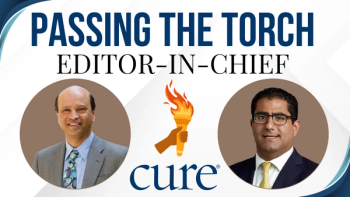
Our longtime editor-in-chief offers advice to his successor while discussing the news and education CURE magazine provides for patients with cancer, families and caregivers.
Dr. Kandace P. McGuire discusses how targeted axillary staging differs from traditional methods of staging in patients undergoing breast cancer treatment.
Kelly Grosklags discusses how oncologists can guide patients in shared decision-making while managing expectations following a breast cancer diagnosis.
Dr. Sara M. Tolaney discusses breast practices associated with CDK4/6 inhibitors for the treatment of breast cancer.
Melissa Ursini, diagnosed with stage 2 colon cancer, shares her journey to raise awareness and encourage early detection through colonoscopies.
Artificial intelligence aids in polyp detection, enhancing colonoscopy effectiveness and reducing the risk of colorectal cancer progression in patients.
Dr. Andreas M. Kaiser explains how a colostomy may preserve a patient’s health and help to avoid colorectal cancer complications.
Dr. Guru Sonpavde emphasized the importance of better understanding how genetic mutations influence the treatment of cancer care, particularly GU cancers.
Krazati plus Erbitux is well tolerated in KRAS G12C-mutant metastatic colorectal cancer, with manageable side effects and less immune suppression.
Dr. Frederick L. Locke sat down with CURE® to discuss treatment with cema-cel in the ALPHA/ALPHA2 studies for relapsed/refractory large B-cell lymphoma.
Dr. Park sat down for an interview with CURE® to discuss the key takeaways from the 2025 Annual ASCO Genitourinary Cancers Symposium.