
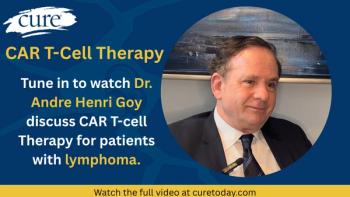
Dr. Andre Henri Goy shared how CAR T-cell therapy led a retired pilot with lymphoma into remission, showing the impact of personalized treatment decisions.
Dr. Andre Henri Goy shared how CAR T-cell therapy led a retired pilot with lymphoma into remission, showing the impact of personalized treatment decisions.
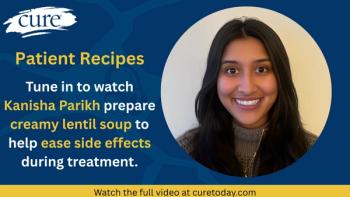
Watch oncology dietitian Kanisha Parikh prepare creamy lentil soup, a soothing, protein-packed recipe to help ease side effects during treatment.

Waldenstrom macroglobulinemia is often slow growing, with high survival but lower quality of life over time, explained researcher Alisha Kimble.

Kasey Rangan discusses ways that families of patients with pediatric brain cancer can advocate for themselves, especially when it comes to mental health.
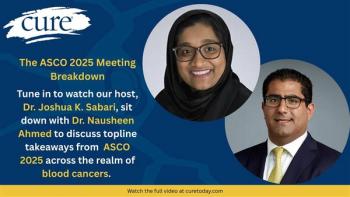
Dr. Joshua Sabari and Dr. Nausheen Ahmed sat down to discuss topline takeaways in the realm of hematologic malignancies following the 2025 ASCO Meeting.

Combining JNJ-1900 with Keytruda may improve distant control of lung cancer, explained by Dr. Jared Weiss.
Dr. Michael Serzan emphasizes the importance of clinical trial participation for patients with kidney cancer.
Dr. Breelyn Wilky explains that personalized treatments are helping improve outcomes for patients with gastrointestinal stromal tumors.
Dr. Rita Mukhtar and Dr. Joshua K. Sabari discuss the role of ctDNA to guide surgical decision-making after neoadjuvant chemo in breast cancer treatment.
Dr. Raajit K. Rampal and Dr. Joshua K. Sabari walk through updates for patients in the treatment of blood cancers, including polycythemia vera.
Treatment with zanzalintinib plus Opdivo and Opdualag is an option worth exploring in patients with previously untreated clear cell renal cell carcinoma
Both non-small lung cancer and small cell lung cancer is a disease that now has various therapeutic options available, according to experts.
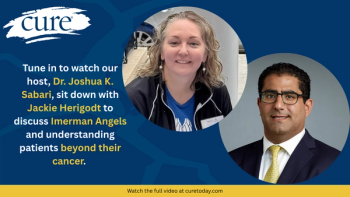
Dr. Joshua K. Sabari and Jackie Herigodt sat down to discuss the importance of knowing a patient beyond their cancer diagnosis.
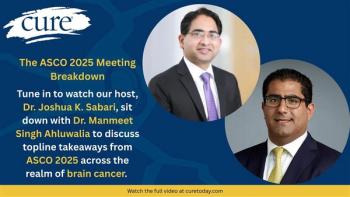
The de-escalation of therapy helps avoid unnecessary toxicity from treatment in patients with brain cancer, explained Drs. Joshua K. Sabari and Manmeet Singh Ahluwalia.
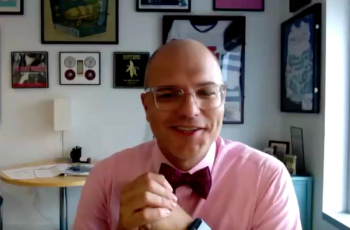
Dr. Aaron Gerds breaks down the outcomes of the phase 3 VERIFY trial, investigating rusfertide, for patients with polycythemia vera, a type of blood cancer.
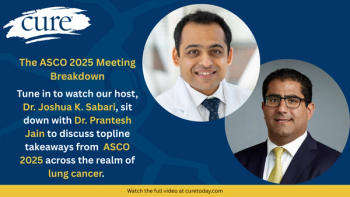
Dr. Joshua K. Sabari and Dr. Prantesh Jain delve into key lung cancer outcomes from the 2025 ASCO Meeting that patients should be aware of.
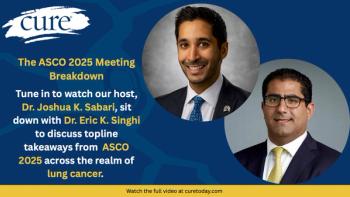
Expert oncologists Dr. Joshua K. Sabari and Dr. Eric K. Singhi break down key updates and takeaways in lung cancer treatment following ASCO 2025.
Dr. Michael Serzan provides expert takeaways on treatment updates for patients with early-stage kidney cancer following the 2025 ASCO Meeting.
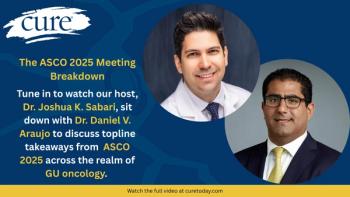
Dr. Joshua K. Sabari sat down with Dr. Daniel V. Araujo to discuss topline takeaways from the 2025 ASCO Meeting across the realm of genitourinary oncology

Patients can prepare for self-advocacy by bringing personal overviews to help care teams connect with them as individuals, explained Michelle Kirschner.
Enhertu with Perjeta nearly doubled progression-free survival versus standard treatment in metastatic HER2-positive breast cancer, study shows.
The VERIFY trial explores rusfertide to manage polycythemia vera without causing iron deficiency symptoms, Dr. Aaron Gerds explained.
Michelle Kirschner discusses the how patients can foster a strong network of supporters from diagnosis through survivorship.
It is important to understand why it is vital that patients and survivors of cancer take steps to reduce the body’s burden both before and after treatment.
Adding subcutaneous sasanlimab to BCG improved recurrence-free survival in non–muscle-invasive bladder cancer, according to Dr. Petros Grivas.
Natalie Schnaitmann discusses urgent supportive care gaps younger women with cancer encounter, and how they affect long-term quality of life.
New or persistent acid reflux, especially after age 50, may mean higher risk for esophageal cancer, particularly in people with other known risk factors.
Dr. Massimo Cristofanilli discusses the early use of camizestrant with a CDK4/6 inhibitor to target ESR1 mutations, as it may improve outcomes in metastatic breast cancer.
Dr. Sarah Sammons discusses side effects associated with RLY-2608, and how it effects patients with HR-positive, HER2-negative advanced breast cancer.
Dr. Alexander Chehrazi-Raffle discusses findings from the phase 3 TiNivo-2 trial, designed to evaluate treatment with Fotivda in patients with metastatic renal cell carcinoma.