
First-line treatment with Opdivo plus low-dose Yervoy improved survival among patients with advanced NSCLC compared to chemotherapy, according to results from the CheckMate-227 trial.
First-line treatment with Opdivo plus low-dose Yervoy improved survival among patients with advanced NSCLC compared to chemotherapy, according to results from the CheckMate-227 trial.
The addition of Lynparza to maintenance therapy with Avastin improved time to disease progression in women with advanced ovarian cancer, according results of the PAOLA-1/ENGOT-ov25 trial.
Morever, the next-generation androgen receptor improved overall survival, compared with placebo, in patients with nonmetastatic castration-resistant prostate cancer, according to updated findings of the phase 3 SPARTAN trial.

The executive director of the Cancer Policy Institute at the Cancer Support Community offers some candid advice for individuals who may be facing a new cancer diagnosis.

The merging of MyLifeLine.org with Cancer Support Community facilitates more comprehensive social and emotional support for patients and caregivers affected by cancer.
Treatment with fedratinib may lead to clinically meaningful responses among patients with myelofibrosis who were previously treated with Jakafi, according to an updated analysis of the phase 2 JAKARTA2 study.
Given with each dose of chemotherapy, trilaciclib temporarily puts bone marrow to sleep, helping to prevent fevers, infections and hospital stays in patients with small cell lung cancer.

Patients with breast cancer can still enroll in a clinical trial that is seeking to find the cause behind cardiac toxicity related to anthracycline-based treatment.

Researchers examined what goes into treatment decision-making for patients with multiple myeloma.
With new ways to treat chemotherapy-induced side effects, it seems that chemotherapy, combined with checkpoint inhibitors, is here to stay for the foreseeable future, according to one expert.

With a wealth of drugs available for the treatment of liver cancer, one expert explained how combination therapy may be where the future is headed.
One expert weighs the benefits and drawbacks of expanding clinical trials to be more inclusive and reflective of the general patient population with cancer.
A breast cancer survivor and hereditary cancer expert discussed how patients can find accurate information about genetic mutations.
A medical oncologist discusses the findings of three clinical trials presented during the 2019 American Society of Clinical Oncology Annual Meeting.

One expert discusses the “extremely interesting and extremely dynamic” field of renal cell carcinoma, and how recent research and FDA actions could offer hope for patients and their doctors.

While half of women with gynecologic cancer reported experiencing significant fatigue during treatment, only 8% of survivors had symptoms regress without intervention.

Long-term survivors of pediatric neuroblastoma may be at an increased risk for neurocognitive impairment – in particular, due to age at diagnosis and the type of treatment received.

A glioblastoma (GBM)-specific app, called OurBrainBank, efficiently collected patients’ symptoms – offering many hope for future research, according to founder Jessica Morris.
Studies show that the social stigma can actually affect a patient’s level of care and lead to worse health outcomes.
A lymphoma expert discusses the side effect profile and follow-up data from the ECHELON-1 clinical trial.
Tumor mutation burden may be an independent predictor of developing depression in patients with lung cancer, according to Dr. Daniel McFarland.
Breakthroughs such as CAR-T cell therapy in the treatment of mantle cell lymphoma could help patients overcome drug resistance and ultimately live longer, according to Dr. Michael Wang.

The growing use of telecommunication and technology to provide health care – or telemedicine – offers many advantages, but also comes with challenges, says one expert.
Trilaciclib, an intravenous CDK 4/6 inhibitor, in combination with Hycamtin may reduce chemotherapy-induced myelosuppression in small cell lung cancer, according to one expert.
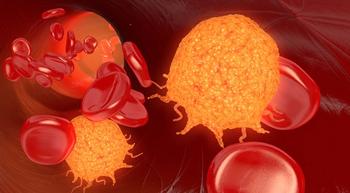
Newer treatments for MCL offer hope to patients living with the fast-growing and challenging-to-treat disease.
Mantle cell lymphoma remains incurable, despite researchers’ best efforts. However, new treatment options show promise in the relapsed/refractory setting and may improve patient outcomes if moved to the front-line, according to Dr. Reem Karmali.

The president and founder of Blue Faery: The Adrienne Wilson Liver Cancer Association discussed new initiatives and what’s on the horizon in the treatment of liver cancer.

In assessing the quality of family cancer history entered into electronic health records, researchers found that such reporting was suboptimal – highlighting the need to optimize online collection with a provider-free approach.

Increased tumor mutation burden (TMB), which is associated with more inflammation, may be a factor in determining which patients with lung cancer are at higher risk for depression.

The growing use of immunotherapy in oncology has confronted many community practice-based oncologists with challenges to implementation, but one advocacy group’s new initiative aims to educate and empower.