
Women who took estrogen alone as hormone therapy for their menopause experienced decreased rates of breast cancer and death from the disease even after they stopped taking the therapy, when compared to women who took estrogen with progestin.
Women who took estrogen alone as hormone therapy for their menopause experienced decreased rates of breast cancer and death from the disease even after they stopped taking the therapy, when compared to women who took estrogen with progestin.

Survival and recurrence rates were similar among patients with breast cancer who either received accelerated partial breast irradiation or whole breast irradiation.

This massive event for women with breast cancer just may be “man’s breast friend”.

Women treated with Arimidex for five years were 50% less likely to have developed breast cancer recurrence compared with women given placebo at nearly 11 years follow-up after stopping treatment.
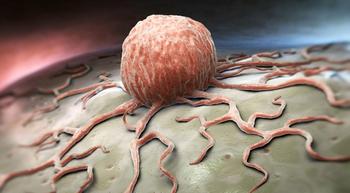
Adding Tecentriq to chemotherapy before surgery did not improve the rate of pathologic complete response in patients with advanced, early-stage triple-negative breast cancer.
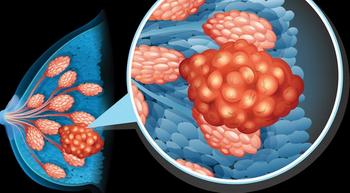
Nearly 65% of patients whose disease had spread to lymph nodes showed no signs of cancer following a regimen of Keytruda plus chemotherapy compared with those who received chemotherapy alone.
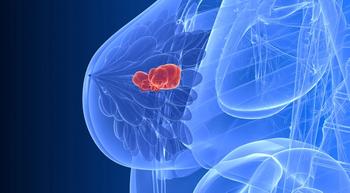
Results from a phase 3 trial showed significant increases in five-year invasive disease-free survival estimates among Japanese patients with hormone receptor-positive, HER2-negative breast cancer.
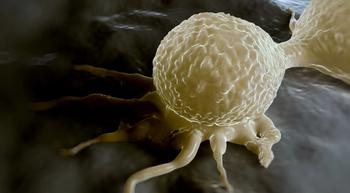
Researchers found that the addition of Perjeta to Herceptin plus chemotherapy reduced the relative risk for breast cancer recurrence or death in patients with operable HER2-positive early breast cancer, according to a six-year follow-up.

The HER2-targeted antibody-drug conjugate T-DXd achieved a response in 60.9% of patients, according to phase 2 study findings.

Expanding a combination from two drugs to three may lengthen the time until disease progression for patients with relapsed or refractory multiple myeloma.

Patients aged 55 and over remained in remission after receiving CC-486, according to phase 3 study findings.
Whole genome sequencing of blood and bone marrow from patients with acute myeloid leukemia and myelodysplastic syndrome has revealed previously unknown disease subtypes.
In a phase 3 clinical trial, Blincyto (blinatumomab), a type of immunotherapy, improved survival and showed fewer side effects in young patients.

Results presented at ASH 2019 suggest the combination therapy is superior to chemoimmunotherapy.

New findings show that the socioeconomic status of children with AML plays a significant and alarming roll in the rate of their overall survival after diagnosis.
Baseline laboratory values for AML clinical trials are setting unnecessary restrictions for kidney function that excludes African American patients with AML when this comorbidity does not impact overall survival.
Some patients with non-Hodgkin lymphoma may soon have a treatment option that could offer complete remission, according to new data presented at the American Society of Hematology 2019 Annual Meeting.

A dual-targeted chimeric antigen receptor-T cell therapy showed a more than 90% overall response rate in patients with relapsed or refractory disease.
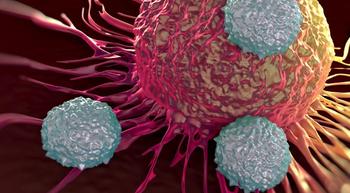
JNJ-4528 showed deep responses and proved to be safe in patients with multiple myeloma, according to CARTITUDE-1 study findings.
Dr. Camillo Porta discussed what is new in kidney cancer beyond the first line of treatment at A Vision of Hope: A Kidney Cancer Educational Symposium.
Those with non-clear cell kidney cancer have much to look forward to as oncologists’ understanding of the disease is evolving.
Pre- and post-surgical treatment could benefit patients with kidney cancer who are at high risk for disease recurrence.

One patient advocate explained how patients with renal cell carcinoma can query about clinical trials and what they need to know about them to do so.
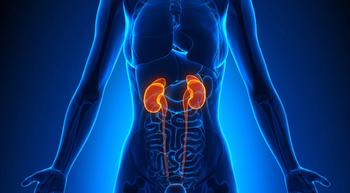
Nutrition plays a key role in kidney cancer; however, the need to address it is still unmet.
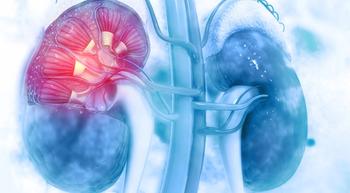
One expert explained what patients should know about their kidney cancer diagnosis at A Vision of Hope: A Kidney Cancer Educational Symposium.

“Survivors living with recurrent breast cancer have unique needs and programs that address these needs can enhance patient satisfaction,” the study authors wrote.

Two studies showed that adding a CDK4/6 inhibitor to treatment with Faslodex improved survival among women with hormone receptor-positive, human epidermal growth factor2-negative advanced breast cancer.
First-line Tagrisso significantly extended overall survival compared with first generation EGFR-TKIs in patients with Ex19del/L858R EGFR mutated advanced non–small cell lung cancer, according to results from the phase 3 FLAURA study.
One in two patients with metastatic melanoma is alive five years following treatment with Opdivo plus Yervoy, according to long-term follow-up of the phase 3 CheckMate 067 trial.
Frontline maintenance therapy with Zejula lengthened time without disease progression among women with newly diagnosed, advanced ovarian cancer, according to findings from the phase 3 PRIMA study.