



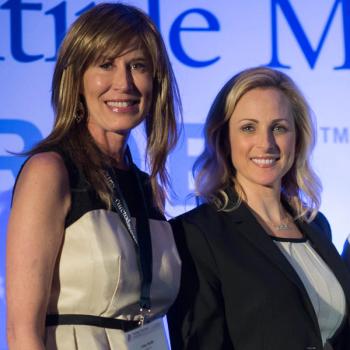
In keynote speech, TV and movie actress Marlee Matlin urges resilience.
In keynote speech, TV and movie actress Marlee Matlin urges resilience.

Without a cancer diagnosis, would I have
Once the initial shock of a malignant diagnosis is absorbed, patients and families need to practice due diligence to ensure the best possible and most appropriate care.
Uncertainty comes with the territory of being a cancer survivor, but how you deal with it can be a game-changer in how you move forward.
Wearing silicone prostheses presents many challenges and some of them are quite funny!

The approval was based on results from a multicenter, open-label phase 2b study in which the overall response rate with Evomela was 95 percent among 61 patients.
I recommend that anybody treated for breast cancer learn about lymphedema before it ever becomes an issue. Information can help with preventative or palliative care. I also hope that distress lymphedema causes, if it develops, is something you can talk to doctors, friends, and survivors about.
Nothing beats the comforts of home during our most vulnerable moments.
If the traditional male role model is one who is in control, confident and able to go it alone, then we have to face that fact that cancer is an unmanly disease.
Two-time survivor discusses gratitude to cope with her cancer and her life.
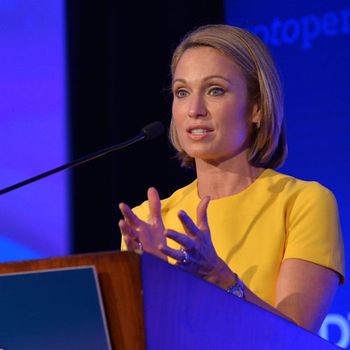
Breast cancer survivor and news anchor Amy Robach delivered a compelling keynote address at the 33rd Annual Miami Breast Cancer Conference® that was as hard-hitting as it was emotional.

Corporate Angel Network makes travel a bit easier (and more luxurious) by flying patients with cancer in empty seats on corporate jets.
Cancer isn't something I ever expected in my life, nobody ever does. For me, it has changed my life in ways that I never would have expected.

The approval was based on data from 50 patients with ROS1-positive NSCLC, in which the overall response rate was 66 percent with a median duration of response of 18.3 months.

It has been an "embarrassment of riches" in the treatment paradigm for patients with non–small cell lung cancer (NSCLC) with two approved two PD-1 agents.
Whether routine or not, those MRI and CT scans force a last-minute pep talk.
Cancer is not an identity or a label.

The immunotherapy will continue to be offered in the phase 3 trial and compassionate use programs.
When it comes to gastrointestinal (GI) cancers, there’s quite a disparity in the gains that research is bringing us.
Perhaps one day, doctors will be able to hit a "reset" button on our bodies, turning them back into the well-run machines they once were.
We all have people we love, and when we are sick, we may feel that we are not able to love them as fully as they deserve. But there are ways to express and accept love through the helplessness.
Your support group doesn’t have to be traditional. It just has to be one that works for you.
Medical illustrations by Erin Moore explaining novel treatments for glioblastoma.
Nature offers many role models for coping with cancer's challenges.
On feeling low and flying high after cancer surgery

Over the last 15 years, and with more goals in 2016, ABC2 (Accelerate Brain Cancer Cure) advances breakthroughs in brain cancer research. Learn more in a conversation with Max Wallace the ABC2 CEO.

Genomic variations can drive differences in the way people benefit from nutrients — an idea that may lead to individualized anticancer diets.
A two-time cancer survivor suggests ways new patients can find support to cope with survival.
Patients with cancer aren't the only ones who need a little levity in their lives.

In an interview with CURE, Craig Hofmeister provided insight into the potential for combination regimens in relapsed/refractory patients with multiple myeloma.