






Claustrophobic, needle-phobic and just plain wimpy, the fight to survive has pulled me through.
Claustrophobic, needle-phobic and just plain wimpy, the fight to survive has pulled me through.
Would you go see a genetics counselor again, now that there may be more to test for? Would you get a double mastectomy seven years out?

For people with multiple myeloma, dollars spent on treatment are being stretched farther than they used to be, a recent study shows.

Some moments in life get seared into your brain. Years later you can picture exactly what you were wearing. You can conjure up the smell of the room.

Mail-order kits are now making genetic testing more accessible to patients who may need it the most.
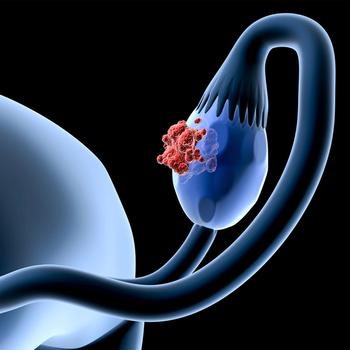
The future for immunotherapy treatment for gynecologic cancers may be found in drug combinations, according to Dmitriy Zamarin, M.D., Ph.D., who admits that these agents have been slower to demonstrate progress in this group of patients.
A cancer diagnosis is not something any of us plan for. Be sure to have patience with yourself during and after treatment.
Second guessing personal medical decisions is common in the world of breast cancer. Is it wrong to rethink some of those choices?
Cancer survivors generally work very hard to be healthy after a diagnosis. This article gives permission to enjoy life and have a balanced attitude toward healthy living.

Keytruda (pembrolizumab) was granted FDA approval for the treatment of patients with recurrent or advanced gastric or gastroesophageal junction (GEJ) adenocarcinoma who have received two or more lines of chemotherapy and are PD-L1-positive.

OVER THE LAST FEW years, significant advances were made in the treatment of patients with chronic lymphocytic leukemia (CLL). Several novel therapies, most of them oral, have now been approved by the Food and Drug Administration. These include Imbruvica (ibrutinib), a Bruton’s tyrosine kinase (BTK) inhibitor; Venclexta (venetoclax), a B-cell lymphoma-2 (BCL2) inhibitor; and Zydelig (idelalisib), a phosphoinositide 3-kinase (PI3K) inhibitor.
Opdivo (nivolumab) was granted FDA approval for the treatment of hepatocellular carcinoma (HCC) – regardless of PD-L1 status – for patients who have previously been treated with Nexavar (sorafenib).

Venclexta (venetoclax), a BCL-2 inhibitor, had promising results in patients with relapsed or refractory chronic lymphocytic leukemia (CLL). According to an updated analysis of a clinical trial, the agent led to negative minimal residual disease (MRD) in 40 percent of patients involved.
Breast cancer survivor reflects back on what she wishes the medical profession's approach could have been to her cancers.
Living in a selfie-centered world can be challenging, especially for those touched by breast cancer.
Pink ribbons came out of the woodwork when I was diagnosed with breast cancer, and at first, I hated them.
I was diagnosed with cancer, quit my job, put college on hold, started chemo, didn't get a role in "Saving Private Ryan" and started digging in the dirt.
Two-time cancer survivor says lets look death and dying in the face so we don't live our lives in (as much) fear.
Immunotherapy agents are promising in the treatment of cancer, but also come with some awful side effects.

The ratio of neutrophils to lymphocytes – two types of white blood cells – can give oncologists valuable information regarding a patient’s prognosis.
It is important to consider quality of life and survival calculations when treating older patients with HER2-positive or triple-negative breast cancer (TNBC), according to a recent talk at the 2017 Lynn Sage Breast Cancer Symposium.
Life after cancer has its own physical and emotional challenges.
Nature has provided medicine for many ailments. A male breast cancer survivor asks, why not this one?
How one cancer survivor attempts to cope with the reality of having chemo for the rest of her life.

In a recent phase 2 study, nearly half of patients who had resectable stage 3B/C BRAF V600-mutant melanoma achieved pathologic complete response (pCR) – meaning that no active cancer cells are present – with neoadjuvant combination therapy consisting of Tafinlar (dabrafenib) and Mekinist (trametinib).
Genomic testing is often expensive and inaccessible to those who can't afford the costs, but companies are working diligently to provide people with alternatives.
Blogging for CURE helped me find my voice and process my breast cancer experience.

From fatigue to chemo brain, Curetoday.com and CURE Magazine offer a variety of resources for people dealing with these effects.

Brian d'Arcy James of 13 Reasons Why, Spotlight, and Hamilton is set to take on the 2017 Bank of America Chicago Marathon and raise money to support cancer patients and their loved ones served by the Cancer Support Community.

In early 2015, Zika outbreaks caused widespread panic in many parts of North and South America. However, now researchers are exploring the possibility of putting the virus to good use: fighting glioblastoma multiforme (GBM), the most deadly type of brain cancer.