



Breast Cancer
Latest News
Advertisement
Latest Videos

Advertisement
More News
Patients with HER2-positive breast cancer often need to undergo aggressive treatment, but ongoing research is determining if chemotherapy can be scaled back for certain patients.
Watch Dr. Kevin Kalisnky, from Winship Cancer Institute of Emory University, discuss treatment for triple-negative disease during the CURE Educated Patient® Breast Cancer Summit at MBCC.

After being diagnosed with breast cancer, I learned more about the disparities that Black women with the disease face.

As a breast cancer survivor, it’s not only my duty to help the newly diagnosed, but it’s also my responsibility to heed the advice of seasoned champions.
Watch Dr. William J. Gradishar, from Northwestern University, discuss the management of hormone receptor-positive disease during the CURE Educated Patient® Breast Cancer Summit at MBCC.

Here’s a look back at the cancer drugs that gained FDA approval in the winter of 2023.
Watch Isabel Octaviano, from Miami Cancer Institute, Baptist Health South Florida, discuss the nursing perspective to clinical trials during the CURE Educated Patient® Breast Cancer Summit at MBCC.

Pre- and post-menopausal patients with locally advanced or metastatic ER+/HER2- breast cancer with an ESR1 mutation are eligible to participate in the next round of Fablyn’s upcoming clinical trial.

Exercise, from walking to running, allows patients to take control of their bodies at a time when things may feel out of reach during their cancer journey.

I’ve met too many people who were told that they were too young for cancer before being diagnosed.
Watch Dr. Reshma Mahtani, from Miami Cancer Institute, Baptist Health South Florida, discuss clinical trial myths during the CURE Educated Patient® Breast Cancer Summit at MBCC.

While I decided to tell friends, family and even TSA agents about my cancer, others are much more private about their diagnosis, and I wonder why.

When mindfulness was first recommended when I was diagnosed with breast cancer in 2004, I scoffed. But now, years later, I know how important a tool it can be.

My daughter continues to be there for me throughout my cancer experience, even on my most difficult days.

My major source of support throughout my journey was our local breast cancer support group.

From a contestant on “Queer Eye” dying of cancer to a string of brain cancers in former Philadelphia Phillies players, here’s what’s happening in the oncology space this week.

Patients with HER2-positive metastatic breast cancer treated with the novel antibody drug conjugate ARX788 conferred a significant survival benefit compared with those treated with a control.

When my daughter was going through cancer treatment, we often heard the beeping of her chemotherapy IV. But recently, the memory of that sound was replaced with something much happier.

Thanks to an amazing care team, I got through my breast cancer with little worry.
Removing the Ki-67 score to determine eligibility for Verzenio treatment in patients with HR-positive, HER2-negative, node positive, early breast cancer allows for more patients to receive this treatment.
I thought my sensitivity to breast cancer scenarios on television shows had gotten stronger, but it hasn’t.
After experiencing intense scanxiety after my single mastectomy, I decided to go back and have a prophylactic mastectomy.
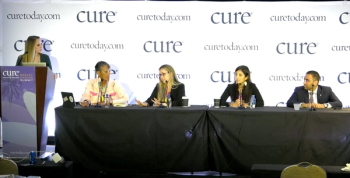
Watch Dr. Naomi Dempsey, Dr. Ana Sandoval Leon, Dr. Rupesh Kotecha and Ricki Fairley answer questions about HER2-positive disease during the CURE Educated Patient® Breast Cancer Summit at MBCC.

After undergoing a partial mastectomy, scar tissue caused pain and stiffness. Then, I found a simple exercise that helped immensely.

I didn’t think that I’d lose my hair again after starting my latest breast cancer treatment, but I did — and with that hair loss came both new and familiar feelings.
Advertisement
Advertisement
Trending on CURE
1
Breast Cancer Treatments Awaiting FDA Decisions: 4 to Watch
2
From Precision Medicine to AI: The Future of Cancer Care
3
FDA Approves Etcamah Plus CDK4/6 Inhibitor for ESR1-Mutated Breast Cancer
4
The Nurse Who Got Me Through CAR-T Cell Therapy for Myeloma
5