
Linking a targeted drug to a chemotherapy shows promise for treating metastatic triple-negative breast cancer.
Linking a targeted drug to a chemotherapy shows promise for treating metastatic triple-negative breast cancer.
Why US cancer registries need to be modernized to help us better understand cancer.
In a gel applied directly to the breasts, the anti-estrogen drug tamoxifen may help prevent cancer and fight DCIS — with few side effects.
New treatments are lengthening life and improving its quality for some with metastatic breast cancer.
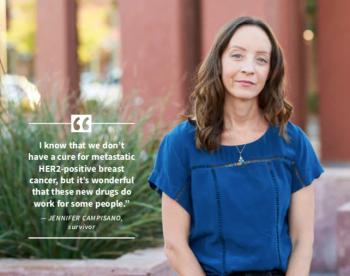
Two decades ago, a patient with HER2-positive breast cancer had a single targeted drug option. Now a plethora of new and emerging treatments fill the landscape.
A two-time cancer survivor shares ideas to cope with the lonely, frightening feelings that came with her breast cancer diagnosis.
Liquid biopsies may reveal who needs treatment for recurrent breast cancer — and, just as important, who doesn’t.
We hope this issue helps answer your questions about treatments and side effects, leaving you better informed and more confident as you make decisions about your care.
The development of the drug Herceptin (trastuzumab) to treat HER2-positive breast cancer marked an enormous milestone: In the opinion of many, it represented the birth of targeted therapy for cancer.
Is there anything I would tell my younger self about any risks for cancer? What about now: what can I suggest to my sister? What do I need to tell my children about their risks for cancer?

Forty-eight percent of those surveyed by The Pink Fund said the cost of transportation was a barrier to receiving treatment and 60% missed an appointment or were late to one because of transportation issues.
For one mom, cancer presented an opportunity to teach her daughters empathy.
Facing those drawn-out days between a breast cancer diagnosis and mastectomy surgery.

CURE® asked its readers for their thoughts on “Pinktober,” which ran the gamut of emotions.
A single question acknowledging someone else's experience can lift the heavy feeling of cancer isolation.
Singer and actress Olivia Newton-John is auctioning off her costumes from the movie “Grease,” along with other clothing and household items, to benefit her cancer hospital in Melbourne, Australia.
After breast cancer, one woman found new purpose and renewed relationships by adopting a special puppy. Now, she fosters others.
Faith may influence a breast cancer recovery by helping a person gain a deeper understanding of their life’s meaning and purpose.

The Metastatic Breast Cancer Alliance (MBCA) launched a campaign to bring awareness of clinical trials to more individuals and encourage them to speak with their health care teams about them.
It isn’t easy living with stage 4 breast cancer when people want to hear uplifting stories about survivors.
After losing numerous relatives to cancer, one survivor is determined to leave her children a legacy of hope.
Having cancer is a ghostly experience, and surviving may feel like a shot in the dark.
"All cancers deserve the attention that breast cancer gets in October. To my brothers and sisters with 'non-pink' cancer and other diseases: it does not mean we don't care."
Could this cough be a sign that cancer has gone to my lungs?
Although breast cancer is commonly diagnosed in the United States, patients are left with unmet needs.