






Liver Cancer
Latest News
Advertisement
Latest Videos



Advertisement
More News

The FDA approved a kinase inhibitor for the treatment of adults with previously treated, unresectable locally advanced or metastatic cholangiocarcinoma with FGFR2 fusion or other arrangement.

The study results, according to the authors, suggest that the combination of folinic acid plus the chemotherapies fluorouracil and oxaliplatin should become the standard-of-care therapy in patients with advanced biliary tract cancer whose disease progressed with cisplatin and gemcitabine.

Twenty percent of patients with resectable hepatocellular carcinoma had a significant amount of cell death when receiving Libtayo before surgical intervention.

Interim results from a phase 2 study demonstrated that patients inoperable or advanced intrahepatic cholangiocarcoma and a FGFR2 gene mutation had a disease control rate of 79% when treated with derazantinib.

Members of an FDA committee recently voted in favor of upholding Keytruda’s accelerated approval indication for the treatment of patients with advanced hepatocellular carcinoma who had previously received treatment with Nexavar. However, the committee narrowly voted against maintaining Opdivo’s accelerated approval in the same patient population.

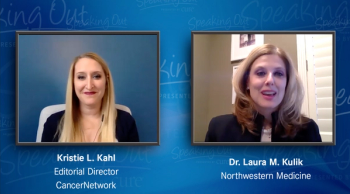
As part of the “Speaking Out” video series, CURE® spoke with Dr. Laura M. Kulik about the basics of liver cancer, highlighting the need for a multidisciplinary approach to care.
Here is a list of some recent trials that launched within the cancer space in April.

A 500 mg dose of Tepmetko, a MET inhibitor, in patients with hepatocellular carcinoma who were previously treated with Nexavar led to a 12-week progression-free survival rate of 63.3%.
CURE spoke with Dr. Marty T. Sellers and Dr. Laura M. Kulik, on behalf of the Blue Faery, about liver cancer and disease – its treatments, causes and areas outside of therapy.

Patients with this liver cancer subtype do not need to be hospitalized to receive this treatment and, according to the agent’s manufacturer, Boston Scientific, can typically receive the therapy in approximately an hour during an outpatient procedure.
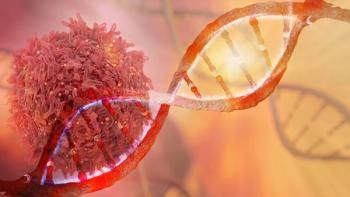
Genomic testing has allowed patients to receive more specific drugs that target mutations in their tumors.

Following resection with radiotherapy increased survival rates for patients compared with those who did not receive the additional treatment.
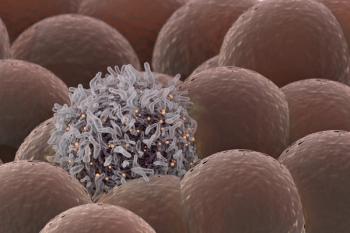
There are multiple treatment patients for patients with cholangiocarcinoma, here's what you need to know about them.
In a phase 2 study of 24 patients with biliary cancer, Aliqopa in combination with Gemzar and chemotherapy led to a six-month progression-free survival rate of 51% with a median overall survival of 13.7 months.

“Along with a tolerable safety profile and supportive quality of life, these final efficacy results demonstrate the clinical benefit of (Tibsovo) in (previously treated patients with IDH1-mutant cholangiocarcinoma), for which there is an urgent need for new therapies,” said an expert from Massachusetts General Hospital, who presented the data.

“This is the longest survival seen in a phase 3 study of advanced liver cancer,” lead study author Dr. Richard S. Finn, of the UCLA Jonsson Comprehensive Cancer Center, said in a virtual presentation of the data.

Patients with hepatocellular carcinoma who live in low-income and rural households are less likely to receive high quality care and therefore are more likely to be diagnosed with an advanced stage cancer.

Over the last 30 years, cases of childhood liver cancer have increased in the United States, Australia and a Canadian province.
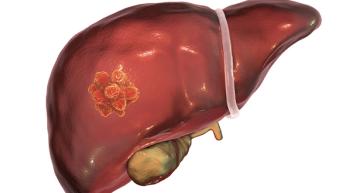
A roundup of liver cancer news and updates that occurred in 2020 patients with cancer may have missed.

A clinical research coordinator discusses how patients with cholangiocarcinoma can get involved in clinical trials, such as the phase 3 PROOF trial, as well as what they should know once they are enrolled.
This week on the “CURE® Talks Cancer” podcast, we spoke with renowned street artist James Cochran about one of his art projects that was commissioned to symbolize the creativity and commitment of those who work tirelessly to eradicate cancer.

Street artist James Cochran gives CURE® an inside look at his newest project: a piece of art he created by applying 50,000 small dots of paint to a canvas using a lab pipette. It will be displayed in the Institute of Cancer Research’s Centre for Cancer Drug Discovery as a symbol of the creativity and commitment of the scientists who work every day to eradicate cancer.
Results of this trial led to an accelerated FDA approval of Opdivo (nivolumab) and Yervoy (ipilimumab) in March to treat this specific patient population.

Overall survival was better with hepatic arterial infusion chemotherapy compared with transarterial chemoembolization, according to phase 3 study findings.

Younger and female patients with a variety of cancer types tend to have strong immune systems that naturally fight an array of cancer cells. The tumor cells the immune system doesn’t destroy are the most evasive, both to the immune system and medications that boost its activity, and this makes checkpoint inhibitor immunotherapy less effective in this population.
Advertisement
Advertisement
Trending on CURE
1
My Sister and I Share a BRCA2 Mutation. We Didn’t Make the Same Choices
2
Could a Genomic Test Spare You Extra Years of Hormone Therapy?
3
10 Things That Got Me Through Treatment feat. Sally Kalksma
4
Text a Survivor: Brad Moore on Life During and After Rectal Cancer Treatment
5