



There are now more drugs than ever to treat and prevent graft-versus-host disease in patients with blood cancer who receive a stem cell transplant.

‘I Would Have Given Up a Long Time Ago’ and Other Things Not to Say to Cancer Survivors
There are now more drugs than ever to treat and prevent graft-versus-host disease in patients with blood cancer who receive a stem cell transplant.

The Food and Drug Administration will review data on Breyanzi (lisocabtagene maraleucel) — a CAR-T cell therapy — for use in the second-line setting for patients with relapsed or refractory large B-cell lymphoma to determine if the indication will be granted approval.

Supportive care should be implemented promptly after patients receive CAR-T cell therapy, but as one expert notes, patients with cancer are often referred for this care too late.

A survivor of multiple cancers explains how “visits” from deceased friends and loved ones made her feel safe before undergoing treatments.

A woman explains how she grapples with the acceptance that her sister may never enter remission from cancer.
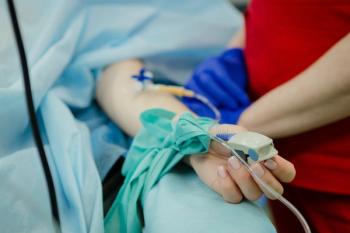
Recent study results showed that the use of a remote monitoring device worn on the upper arm may help patients with blood cancers seek assistance for serious complications while receiving intensive treatments.

CAR-T cell therapy with Yescarta in patients with relapsed/refractory large B-cell lymphoma had improved responses to treatment and survival in the second-line setting, which may help save more lives than standard care, an expert said.
The National Comprehensive Cancer Network now recommends prophylactic monoclonal antibodies for immunosuppressed individuals, such as certain patients with cancer.
A phase 2 trial was recently launched to examine the safety and efficacy of oral inhibitor VK-2019 in patients with advanced Epstein-Barr Virus-positive nasopharyngeal carcinoma, a rare type of head and neck cancer, and lymphoma.
2021 was full of research advancements and FDA drug approvals that continue to improve cancer care for patients with a variety of malignancies.
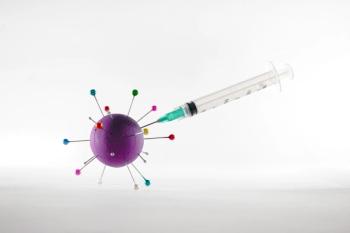
New findings show that 43% of patients with certain blood cancers produced COVID-19 antibodies after receiving a third full dose of the mRNA vaccine.
The Food and Drug Administration approved Orencia, which is commonly used to treat conditions like rheumatoid arthritis, to prevent acute graft-versus-host-disease in adults and children who underwent a hematopoietic stem cell transplant from an unrelated donor.

The addition of a drug commonly used to treat arthritis may reduce the risk of graft-versus-host-disease in patients who underwent haploidentical allogeneic stem cell transplant.
The use of a novel drug combination yielded positive outcomes in patients with B-cell lymphomas for whom CAR-T cell therapy or stem cell transplant isn’t an option.

Researchers found that depression and anxiety may skew patient perceptions of participating in blood cancer clinical trials, thus contributing to low enrollment throughout the United States.

Patients with large B-cell lymphoma tended to have better quality of life that continued to improve over time after receiving Breyzani compared to those given standard of care.
The FDA approval of Rituxan plus chemotherapy is indicated for the treatment of children aged six months to 18 years who have various forms of lymphoma or a form of leukemia.
Patients aged 60 years and older with B-cell malignancies and those who were current or former smokers may have an increased risk for death after a COVID-19 infection, also outcomes may be better for those diagnosed after June 2020.

From Dick Vitale’s return to sportscasting after a brief pause for cancer treatment to a cancer survivor walking 3,000 miles cross-country, here’s what’s happening in the cancer landscape this week.

Although the interest of at-home care including the administration of cancer infusions has grown since the start of the COVID-19 pandemic, hesitation looms over its convenience, cost and safety.

A phase 1 trial of ONO-4685 was initiated for the evaluation of the antibody in patients with relapsed or refractory t-cell lymphoma.

The FDA’s recommendations are aimed at helping individuals and patients with breast cancer make better informed decisions about the decision to receive breast implants, according to experts.

Memory, attention and the ability to multitask may be affected in patients with lymphoma during and after chemotherapy treatment, which can impact one’s capability to complete daily tasks.
New research in blood cancer includes new treatment options for acute myeloid leukemia and a novel therapy using BK virus-specific T cells to treat BK virus-associated hemorrhagic cystitis.

“When survival became my identity, things began to shift in my life forever,” writes a blood cancer survivor.