U.S. counties where more residents had medical debt in collections had higher rates of late-stage lung, head and neck, colorectal and several other cancers, according to a study of 2,958 counties published in October 2026 in JAMA Network Open.
NEJM-published phase 1/2 data show RASONQUE achieved a 42% response rate and 89% disease control in RAS mutant metastatic lung cancer.
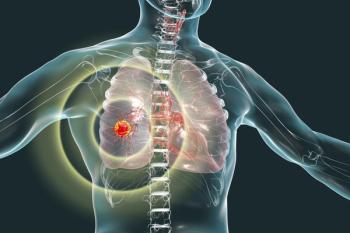
Revolution Medicines, Inc., announced that The New England Journal of Medicine (NEJM) has published a report describing data from a phase 1/2 clinical trial of RASONQUE (daraxonrasib), an oral RAS(ON) multi-selective inhibitor, in patients with previously treated advanced RAS mutant non-small cell lung cancer (NSCLC).
The company said the results support the ongoing phase 3 RASolve 301 trial and address a treatment gap for patients whose NSCLC tumors carry RAS mutations other than G12C, a group for which no targeted therapies currently exist.
The NEJM report is based on the phase 1/2 RMC-6236-001 trial (NCT05379985), which had a data cutoff of July 21, 2025. Within a subgroup of patients who received RASONQUE at doses of 160 mg to 220 mg once daily and who had not previously been treated with docetaxel, the confirmed objective response rate was 42% and the disease control rate was 89%. This subgroup included 38 patients who had previously received first- or second-line platinum-based chemotherapy and anti-PD-(L)1 therapy.
Median survival without progression of the disease in this subgroup was 8.3 months, and median overall survival was 16 months.
"RAS mutations are among the most common oncogenic drivers in lung cancer, occurring in approximately 30% of cases," Dr. Alan Sandler, chief development officer of Revolution Medicines, said in a news release. "Targeted RAS inhibition has demonstrated clinical benefit in patients with RAS G12C non-small cell lung cancer following initial treatment with chemotherapy and immunotherapy, but there are no targeted therapies for patients with other RAS tumor mutations. The rates of objective response, disease control and survival observed in patients treated with rasonque in this phase 1/2 study support the ongoing global, randomized pivotal RASolve 301 trial evaluating rasonque in previously treated RAS mutant non-small lung cancer."
The phase 1/2 trial evaluated once-daily oral doses of RASONQUE at 300 mg or less in 136 patients with second-line or later NSCLC whose tumors carried a range of RAS mutations other than G12C. All patients had disease that progressed following, or were intolerant to, platinum-based chemotherapy and anti-PD-(L)1 therapy. Rasonque demonstrated dose-dependent antitumor activity in the trial.
Rasonque is approved by the U.S. Food and Drug Administration for the treatment of adult patients with metastatic pancreatic adenocarcinoma who have received at least one prior systemic therapy or who are not candidates for multiagent systemic therapy.
Rasonque showed a manageable safety profile in the phase 1/2 trial. Among patients treated at the 160 mg to 220 mg dose range, grade 3 (severe) treatment-related side effects occurred in 25% of patients. The most common were rash, reported in 8% of patients, and diarrhea, reported in 3% of patients. No grade 4 (life-threatening) or grade 5 (death) treatment-related side effects were reported within this dose range.
For more news on cancer updates, research and education,