




Myeloma
Latest News
Advertisement
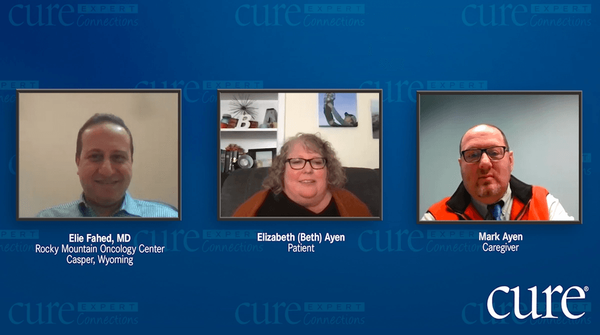
Multiple Myeloma Diagnosis: The Beginning of Beth’s Story
Elie Fahed, MD, provides an overview of what multiple myeloma is, and Beth walks us through her frustrating journey to initial diagnosis as an atypical patient.
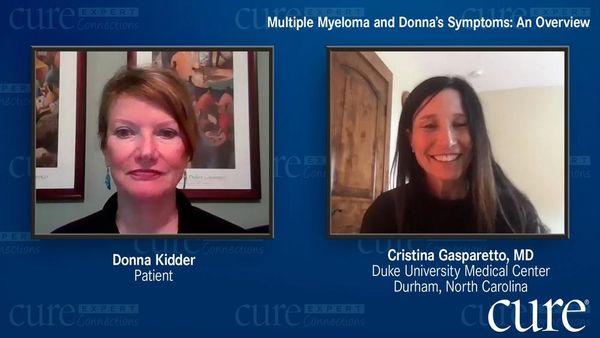
Multiple Myeloma and Donna’s Symptoms: An Overview
Cristina Gasparetto, MD, gives a brief overview of the multiple myeloma disease state and introduces us to Donna, one of her patients diagnosed with multiple myeloma.
Latest Videos



Advertisement
More News

Abecma is the first cell-based gene therapy approved for the treatment of patients with relapsed and refractory multiple myeloma who did not respond to at least four treatments, or whose disease returned after those four lines of therapy.

There is a lot of hype on T-cell engagers and CAR T-cell therapy, but there are other new and exciting immunotherapies in myeloma not talked about that may be approved in the near future, according to an expert.
Although a multiple myeloma diagnosis can be overwhelming for patients, an expert from the Massachusetts General Hospital Cancer Center notes how the disease is very treatable, and that patients can go on to lead full lives.
In this episode of the “CURE® Talks Cancer” podcast, we’re honoring Multiple Myeloma Awareness Month by speaking with Dr. Andrew Yee, about the signs and symptoms of this rare form of cancer, what the current treatment paradigm looks like and what advice he has for newly diagnosed patients.

An expert discusses the treatment options that patients with early relapse myeloma have to treat their recurrent disease, which often follows a cyclical pattern.
View the full CURE Educated Patient Multiple Myeloma Summit on demand.
The agency granted accelerated approval to Pepaxto in combination with dexamethasone in adult patients with relapsed or refractory multiple myeloma, who received at least four prior lines of therapy.

Results from the phase 2 KarMMa trial showed that 73% of patients had a response to the CAR-T cell therapy, including 33% who experienced a complete response or better.

The Food and Drug Administration has had a busy winter so far, approving several new agents to treat a variety of cancers. Here are seven recent approvals that patients with cancer may have missed.
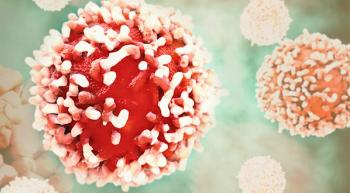
Quality of life improved in patients treated with Darzalex, Revlimid and dexamethasone compared with Revlimid and dexamethasone, and were present regardless of age, functional status and the depth of their treatment response.
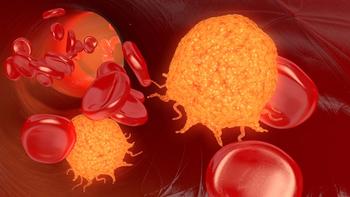
Melflufen with dexamethasone was an effective treatment option for patients with relapsed or refractory multiple myeloma previously treated with a specific chemotherapy drug and/or an anti-CD38 monoclonal antibody.

A caregiver discusses with her granddaughter the cancer diagnosis and treatment of a loved one.
The Food and Drug Administration lifted a clinical hold on the MELANI-01 trial, evaluating UCARTCS1A, a CAR T-cell product in patients with relapsed or refractory multiple myeloma.
In an interview with CURE®, Dr. Irene M. Ghobrial discussed smoldering myeloma, a precursor condition that may progress to multiple myeloma, how to proceed if diagnosed with the condition and the available opportunities to participate in clinical trials to learn more.
Here are the top 10 episodes of the “CURE Talks Cancer” podcast from 2020.

This treatment strategy contributed to a median progression-free survival of 13.93 months compared with 9.46 months in those treated with Velcade and dexamethasone.

This treatment regimen of Xpovio with Velcade, approved for patients with multiple myeloma previously treated with at least one therapy, provides another option for patients with multiple myeloma to potentially close the treatment gap.

Advancements in the diagnosis and staging of multiple myeloma continue to shape treatment decisions and improve outcomes.
In an interview with CURE®, Dr. Giada Bianchi provides patients an overview of myeloma, including symptoms and risk factors of the disease people should look out for.
The complexity of multiple myeloma can make it difficult to treat, but with complexity comes more avenues for researchers to explore what treatments work best. Recently, CURE® spoke with an expert from Dana-Farber Cancer Institute on what patients can expect to see from the clinical setting.
View the full CURE®Educated Patient® Multiple Myeloma Summit here!

The phase 3 trial found that this treatment improves progression-free survival (PFS) during 18.7 months of follow-up, although patients treated with Venclexta (venetoclax) a had increased mortality rates compared with those treated with placebo.
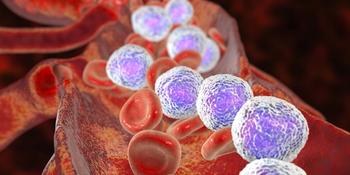
Evolving standards of care in newly diagnosed multiple myeloma (MM) have given patients a wider variety of possibilities but can also be disconcerting. In a presentation during CURE®’s Educated Patient® Multiple Myeloma Summit, Dr. Clifton Mo, of Dana-Farber Cancer Institute, explores the treatment landscape and breaks down what these different options can offer patients.
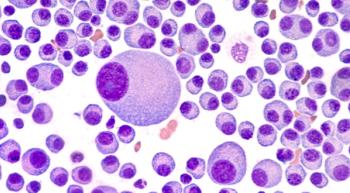
A roundup of the latest news and updates for patients with myeloma from CURE®.

A meta-analysis of six clinical trials showed that standard treatment regimens for high-risk multiple myeloma may be more effective at delaying disease progression if they are given in combination with the targeted drug Darzalex (daratumumab).
Advertisement
Advertisement