Told her metastatic breast cancer was terminal, a woman still alive four years later shares life as an In-Betweener and why society still hasn't caught up.
Six years after her follicular lymphoma diagnosis, a survivor reflects on what cancer changed in her life, from retiring early to living with uncertainty.
There are a lot of people who ask how cancer changed me — how I am a different person since diagnosis and treatment. The thing is, I don't know. So many things have changed, and yet so many are the same — and many of the changes aren't related to cancer, or at least not directly.
In July 2020, I was diagnosed with follicular lymphoma, a form of blood cancer that is considered treatable but chronic and incurable. I was diagnosed, as many people with this type of blood cancer are, more or less by accident, while my doctor was trying to determine the cause of my symptoms and expecting something completely different. Being diagnosed with cancer when my doctor suspected a blood clot in a lung was a shock, to say the least.
Also like many people with blood cancer, I was diagnosed at a late stage, a stage at which most solid tumor cancers would have metastasized. But metastasis doesn't mean as much when the cancer is in a tissue that circulates throughout the body instead of starting in a single spot and growing until pieces start to break off.
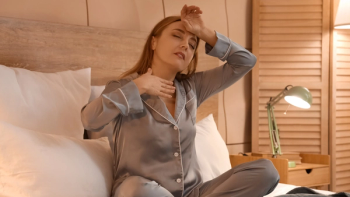
Because the lymphoma was so widespread, I started treatment almost immediately, which is less common in blood cancers than in other cancers; the symptoms that led to diagnosis — fatigue, sweats and sudden unexplained weight loss — were the reason treatment was started. Even now, if I relapse, treatment will most likely be delayed until I have actual symptoms, because various treatments become less effective over time, and while there are a lot more treatment options than there used to be, the options are still finite.
Because I was near retirement when I was diagnosed, and because the COVID-19 pandemic was widespread at the time, I decided to retire a year early; teaching in a middle school while immunocompromised and in the midst of a pandemic of a highly communicable, airborne illness seemed like a bad idea. That was the biggest change, and the biggest reason I may be different — but it's also possible I might have decided to retire that year anyway. A lot of other things happened that year that were unrelated to cancer, which might have led me to retire then as well. There's really no way to know.
Over the last six years, I've gone from seeing my oncologist every month, to every two months, then every three; now I'm down to every six months, and he's not particularly concerned about relapse, relative to his level of concern when I had just finished treatment. But that fear never goes away. Neither does the emotional trauma of being diagnosed with late-stage cancer in a society that believes such a diagnosis is a death sentence. I know now that it's far less of a death sentence than it used to be, but still, things I learned as a child on an emotional level are hard to forget.
So far, I'm still in remission, as far as I know, but that could change at any time. That's probably the biggest change; the uncertainty has impacted every decision I've made since diagnosis. Over time, I've started making long-term plans again, such as adopting a new dog and expecting to spend her entire life with her, but at the same time, I'm still somewhat afraid to plan too far in advance, just in case.
This post was written and submitted by Karen Cohn. The article reflects the views of Cohn and not of CURE®. It is not intended as medical advice.
For more news on cancer updates, research and education,