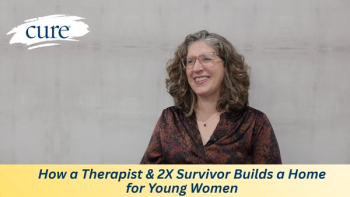
After her own breast cancer diagnosis at 38, psychotherapist Ann Rivello started the Young Women's Group at Bay Area Cancer Connections so others could see someone who'd made it through.

Psychotherapist and two-time breast cancer survivor Ann Rivello explains why the end of treatment can feel isolating, and how support groups, a point person and breaks from cancer can help.
Completing active cancer treatment is often viewed as the finish line, but for many patients, it marks the beginning of a new set of challenges. Ann Rivello, LCSW, a psychotherapist and two-time breast cancer survivor, explained why life after treatment can feel like a "middle place" and how patients can care for themselves during that transition.
Rivello was diagnosed with invasive ductal carcinoma at 38, shortly after running a half marathon. She noticed the lump herself and, though she suspected it was nothing, had it checked. At the time, she had a preschooler and a kindergartner and worked full time as a medical social worker. She spent much of that year undergoing surgery, chemotherapy and radiation.
According to Rivello, people outside the cancer community often view health in simple terms. "In our culture, I think you're either sick or you're well," she said. While others tend to understand active treatment, many assume patients are fully recovered once it ends. In reality, she said, life after cancer is closer to life after a heart attack or a diabetes diagnosis, with ongoing appointments, surgeries and medications.
"When you're really busy with treatments, and then after, it's kind of like you get sort of dropped," she said.
To help fill that gap, Rivello leads Exhale Moments, a support group at the nonprofit Bay Area Cancer Connections (BACC) for people within two years of completing active treatment. Members often feel isolated, anxious about recurrence or betrayed by their bodies, and many say their cancer "isn't even that bad." While she can reassure clients individually that those feelings are normal, she said hearing other members voice the same concerns helps them extend the same compassion to themselves.
Rivello also encourages patients to choose a point person to share updates with family and friends. Otherwise, she said, patients can end up managing everyone else's reactions to the diagnosis.
In addition, she recommends taking breaks, including a weekend off from discussing cancer altogether. "Treat it like an unpleasant job," she said. "You gotta do it, but you don't have to like it."
For more news on cancer updates, research and education,