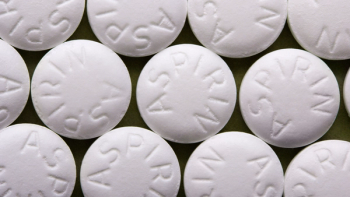
In the phase 3 ASAC trial, daily aspirin did not lower the risk of colorectal cancer returning after treatment for liver metastases, and serious side effects were more common.
A couple shares how caregiving, communication and perspective shaped their life after liver cancer.
Paul McKenzie, a liver cancer survivor, and his wife, Emma, sat down with CURE to share their experiences navigating life as care partners following multiple major surgeries. Together, the couple reflects on how their roles have evolved over time, from the intensive demands of early recovery to the ongoing process of managing long-term side effects and daily routines.
In this conversation, Paul and Emma offer an honest look at the realities of life after treatment, including the physical challenges Paul continues to face and the adjustments required to establish a “new normal.”
Paul: I suppose, as the patient, I have good and bad days because there’s been collateral damage. Particularly after having the Whipple in 2019, I became a diabetic. My digestive system is a complete mess, so eating is a challenge every day. One has to be aware of those good and bad days. I’d probably say I’m 80% positive and 20% negative; I just go off and have a grumble to myself thinking, "Why has my body done this to me?" Just lots of "whys," really. But then I give myself a bit of a kick and say, "Look, this is it now, so just make the best of it."
Emma: Yeah, I think these days it’s just about managing it, really. Obviously, in the early days when Paul first had his operations and was first out of hospital, there were a lot of nursing-type jobs, wasn't there? There were even dark things, like doing his ops and things that I’m not trained to do. In the early days, there was a lot of monitoring, tablets, and trying different foods.
Paul: I lost a lot of weight through the operations, including the hepatectomy in 2020. We thought the Whipple took about six months to recover from, and she nursed me through that, but then the liver cancer came up followed by a further two major operations. I lost six stone in total. She had to try and keep me going, gee me up, and find different foods that I liked and could process. Back in those days, it was a challenge.
Emma: It was something new, a complete change of life. I know everybody used this phrase during and after COVID, but it was finding out what the "new normal" was. There was just adjusting and trying different things. As I said, these days it’s more management, isn’t it? It’s knowing things and planning. It's knowing that if we do something one day, Paul's going to be knackered for the next day or two. So, it’s managing time and making sure he gets enough sleep.
Paul: I was going to say that Emma is very good. She’ll just demand that I go to bed. I’ll say, "Oh, I’m alright," but she’ll say, "No, you’re not. You need to go and have a couple of hours of sleep." So, yeah, she can be a very strict nurse sometimes.
Emma: But it’s also about making the most of life. It’s getting the balance. It’s managing that new normal without giving up on life. If anything, this has shown us that life is precious and too short. Anything can happen; you don’t know what’s around the next corner, so we make the most of our time while we can within the limits I’ve been dealt.
Paul: A few people have said I’m an inspiration with what I’ve gone through and my medical history. Even before this, I’ve had a stroke, cardiac surgery, and I have a very rare blood condition. The list goes on. But the last few years, well, you can’t look back. You can’t change anything that’s happened. These things had to be done, otherwise I wouldn’t be here now. You’ve got to take the positive: I’m alive. I wake up every morning. We’ve got a nice life, a lovely family, and we do as much or as little as we want to.
Emma: Sometimes I say you’re taking the "in sickness and in health" bit a bit far! We’ve been married 31 years this year, and I’m like, "Okay, what about all the other vows?" But it is also about having some perspective. Paul takes so many drugs, and it can be a bit depressing at times, thinking, "Here’s another handful I’ve got to take." But I always say it’s like Iron Man — he has that thing in his heart that keeps him alive. I say, "That’s your Iron Man thing; this is keeping you alive." My mum has a good phrase as well; she says, "What you can’t cure, you must endure."
Paul: Depending on what sort of mood I’m in, that phrase is either positive or negative. But we can’t do anything about it, so we have to live with it.
Emma: Thank you. I apologize if I get emotional; I burst into tears on a regular basis.
Emma: Well, you go first, because something popped into my head based on what you said earlier. One thing we’ve learned, despite being together all this time, is that we need to be honest with each other about how we’re feeling physically and emotionally.
A lot of times, Paul will go off and have some quiet time, and I’ll be asking, "Are you okay? What’s wrong?" and he’ll say, "I'm fine, just leave me alone." It’s learning when to share and what to share. For many years, we both kept things to ourselves because we didn’t want to worry the other person. We were almost too scared to talk about it because we didn't want to face up to it, even though we did do a funeral plan before one of the operations. We learned that we actually do need to share.
We worry about each other without wanting to worry the other person, if that makes sense. Once we opened up and started being more honest about how we felt, it helped.
Paul: I remember a few years ago, about a year after everything when I was recovered, you told me to stop talking about it because it brought back bad memories. That conversation was so enlightening for me. I was asleep through a lot of my recovery; I didn’t see the wires and the raw stuff.
I was in an induced coma for three days after the Whipple. I went in on Thursday morning in my theater gown and compression socks; we chatted in the corridor and kissed goodbye. It was supposed to be an eight or nine-hour surgery, so I thought I’d be awake by the end of the day. They didn't wake me until late Sunday night. The first thing I knew was my son, Sam, was sitting there. I thought, "Hang on, Sam’s not due until the weekend. Why are you here on Thursday?" That’s when Emma gently told me I’d been in a coma for three days. Emma saw the real, raw stuff.
She reminds me of that every once in a while, to say it was a different experience for her than it was for me. We’ve learned how to communicate so much better in the last three or four years than we did in the whole of our relationship. It’s brought us much closer together.
For more news on cancer updates, research and education,