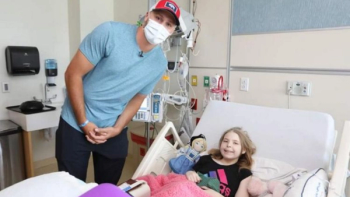
Hannah was 11 when she was diagnosed with acute lymphoblastic leukemia (ALL). Four years, two relapses and a 53-day hospital stay later, she is back in school.
FDA removal of an exclusion allows Yescarta use in primary CNS lymphoma, showing safety and strong efficacy in relapsed disease.
Dr. Lakshmi Nayak, director of the Center for CNS Lymphoma at Dana-Farber Cancer Institute, explained in an interview with CURE that the Food and Drug Administration (FDA) removal of primary central nervous system (CNS) lymphoma as an exclusion for Yescarta (axicabtagene ciloleucel) expands access for patients with relapsed or refractory disease.
Primary CNS lymphoma is rare and aggressive, with no FDA-approved treatments and high recurrence rates after chemotherapy. Early CAR-T cell trials excluded patients with central nervous system involvement due to concerns about neurotoxicity. However, Nayak and colleagues found the therapy was as safe in CNS lymphoma as in systemic lymphoma, with no higher rates of neurologic side effects and no lasting toxicities. They also observed strong efficacy.
Nayak: To answer that, I’ll first provide some background on primary CNS lymphoma. This is an extremely rare and aggressive cancer of the nervous system. Historically, there have been very limited treatment options. In recent years, chemotherapy regimens have been optimized, leading to better outcomes. That said, there are currently no FDA-approved treatments specifically for this disease. While some patients respond to chemotherapy-based regimens, the risk of recurrence is high, about 50% to 60% within the first two years. Additionally, approximately 10% to 15% of patients do not respond at all to high-dose methotrexate-based chemotherapy.
This highlights a clear unmet need. Early studies of CD19-directed CAR-T cell therapy, including Yescarta, excluded patients with primary CNS lymphoma or any central nervous system involvement. One reason was concern about neurotoxicity, since these therapies caused significant neurologic side effects even in patients without brain tumors. The concern was that patients with existing brain tumors might experience even higher toxicity.
When Yescarta was previously approved for other lymphomas, primary CNS lymphoma was excluded. In our study, we found that not only was Yescarta safe to use in patients with CNS lymphoma, but it was as safe as it is in patients with systemic lymphoma without CNS involvement. We also found strong efficacy in this population. These findings are very encouraging in a disease that has been difficult to treat. The implications are significant, as we now have evidence of both safety and efficacy.
There have been no FDA approvals specifically for this disease. This study and the FDA label update, which removes primary CNS lymphoma as an exclusion criterion for Yescarta, represent an important step. Primary CNS lymphoma is not explicitly added to the label, but the removal of the exclusion allows physicians to offer this therapy. It still requires insurance approval, but it provides a pathway for patients with limited options.
Patients experience similar side effects to those seen in systemic lymphoma. In the first several days, some develop cytokine release syndrome, or CRS, which can present as fever, chills, low blood pressure and elevated inflammatory markers. We monitor these closely.
After CRS improves, neurologic symptoms may occur. These can include headaches, confusion and language difficulties. In more severe cases, patients may become unresponsive and require monitoring in the neuro ICU. Importantly, these side effects are transient and typically resolve within several days. We manage them based on severity, sometimes on the hospital floor and sometimes in the neuro ICU, in collaboration with neuro-intensivists. We use medications to control symptoms and adjust treatment as needed.
Seizures can also occur. These may be related to the therapy or to the underlying tumor, and both are treated appropriately. We did not observe higher rates of side effects compared with patients without CNS involvement, and we did not see lasting neurologic effects. Some side effects appeared a day or two earlier than reported in systemic lymphoma, but overall patterns were similar.
We begin with a comprehensive neurologic evaluation, including MRI imaging to determine the extent of disease in the brain, spinal cord, eyes or spinal fluid. Establishing a baseline helps us monitor response and anticipate potential side effects based on tumor location.
We also assess overall organ function, including heart, lung and kidney function, to ensure patients can tolerate treatment. Patients then undergo apheresis to collect T cells, which are sent for manufacturing. This process takes about two to three weeks.
Patients receive lymphodepleting chemotherapy as outpatients starting about five days before admission. They are then admitted for CAR-T cell infusion and monitored in the hospital. Some patients are discharged within about seven days if side effects are mild. We require patients to remain within approximately two and a half hours of our center for the first month in case urgent evaluation is needed. In my experience, most patients recover within about 15 days and are able to go home.
We monitor patients closely at day 28 and then at regular intervals, with imaging and lab work to assess response and recovery.
Transcript has been edited for clarity and conciseness.
For more news on cancer updates, research and education,