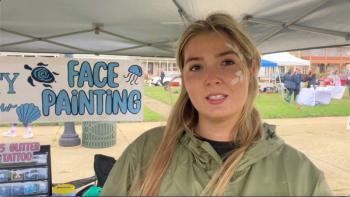
Emma Halligan found connection at a free New Jersey retreat for women with cancer, which held its annual walk and 5K on Oct. 17.
Dr. Rodney Haring discusses strategies to reduce cancer mortality among Native Americans through patient navigation, clinical trials and tribal sovereignty.
Dr. Rodney Haring sat down with CURE for an interview to discuss a critical disparity in U.S. cancer outcomes. While overall survival rates are improving nationwide, Native American people continue to experience the highest cancer mortality, with death rates approximately twice those of White Americans for several cancers.
In this conversation, Haring shares insights from his work leading one of the largest Indigenous patient navigation programs, highlighting strategies to bridge gaps in care and improve clinical trial participation, all while honoring the sovereignty of tribal nations. He outlines how culturally informed patient navigation and respectful engagement with tribal leaders are vital steps toward reducing the cancer mortality gap among Native American populations.
Haring is the co-director of the Health Communications Shared Resource, Seneca Nation, and chair of the Department of Indigenous Cancer Health at Roswell Park Comprehensive Cancer Center.
What strategies or policies do you believe are most important to reduce the cancer mortality gap among Native American populations?
One step is building out those relationships with communities and understanding that it's really based on a nation-to-nation and healthcare-provider standpoint. Some of our patient navigation models that we've been utilizing and sharing are based on working within our rural landscapes while also understanding that relationship to tribal nations.
Our navigators are situated so that one is in the rural community and one is on the reservation; they work hand in hand, understanding and respecting Indian Health Services and traditional healthcare, while also understanding the rural healthcare that exists on the other side of the reservation border. They manage how these interplay together and how they interact with greater federal cancer centers in the region. Those connections are all really important because our people also utilize rural healthcare, and we have to work together for the health of communities in that context.
Clinical trials are also important. From the research side of things, some cancer medicines may not work as well for Native people because they have been normed for non-Native populations. For particular medicines that have never been in our communities, we don't know how effective they are. Therefore, we must educate our tribal leaders and our communities about what a clinical trial is, the nuances of the ethics involved, and the data user agreements, understandings, and protections for those who participate from a tribal government standpoint.
When those conversations are had and agreements are made, we must ensure they respect the sovereignty of the tribal government and the sovereignty of the tribal citizen entering the trial. This is all vital because if we are not included in clinical trials, we may receive a medicine that is not useful or could even be harmful; even if it is helpful for another population, if it has never been used in Indian Country, it may not work.
We need to be part of that process, and we need to educate our communities on their importance while respecting the sovereignty of Native nations.
Transcript has been edited for clarity and conciseness.
For more news on cancer updates, research and education,