Talvey and Darzalex combinations helped patients with relapsed multiple myeloma live longer without disease progression in the phase 3 MonumenTAL-3 trial.
Dr. Ajay Nooka discusses the MonumenTAL-6 trial and explains what the promising Tecvayli plus Talvey results could mean for patients with relapsed multiple myeloma.
The phase 3 MonumenTAL-6 trial found that combining Tecvayli (teclistamab-cqyv) with Talvey (talquetamab-tgvs) reduced the risk of disease progression or death by 89% in patients with relapsed multiple myeloma, compared with standard three-drug treatment combinations.
In this interview with CURE, Dr. Ajay Nooka, director of the Myeloma Program at Emory Winship Cancer Institute, who has been involved with the trial since its conception, discusses what that number means for patients and how the treatment landscape may continue to evolve.
The trial tested two combinations against standard regimens patients receive after their first treatment stops working. The second pairing, Talvey plus pomalidomide, lowered the risk of progression by 73%.
"This is the best hazard ratio that we have ever seen in the history of multiple myeloma," Dr. Nooka said. "It is likely, if somebody is looking for a cure, the first step that one can think about.”
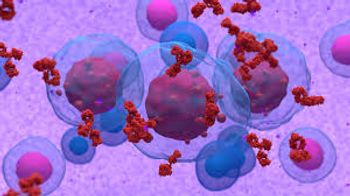
Tecvayli and Talvey are bispecific antibodies that latch onto two different proteins found on myeloma cells, which is why researchers expected the pairing to work better than either drug alone.
"You're hitting the plasma cell from two different directions, and whatever residual cells are remaining that are not amenable to one target are being taken care of by the other," Dr. Nooka said.
Nooka said rates of cytokine release syndrome and neurologic side effects were not higher with the combination and that the safety profile is manageable. Under the drugs' labels, the initial step-up doses are given in the hospital, though he said patients can receive the combination as an outpatient afterward, and those who respond well may be able to stretch to a once-monthly visit.
Because neither drug is chemotherapy, he added, patients can generally keep to their routines. "I have patients that work full time using these bispecific antibodies," he said.
He also expects the combination to be studied in earlier lines of treatment, including in newly diagnosed patients.
For more news on cancer updates, research and education,